
“I think that play is a fundamental part of what we are as a species.”
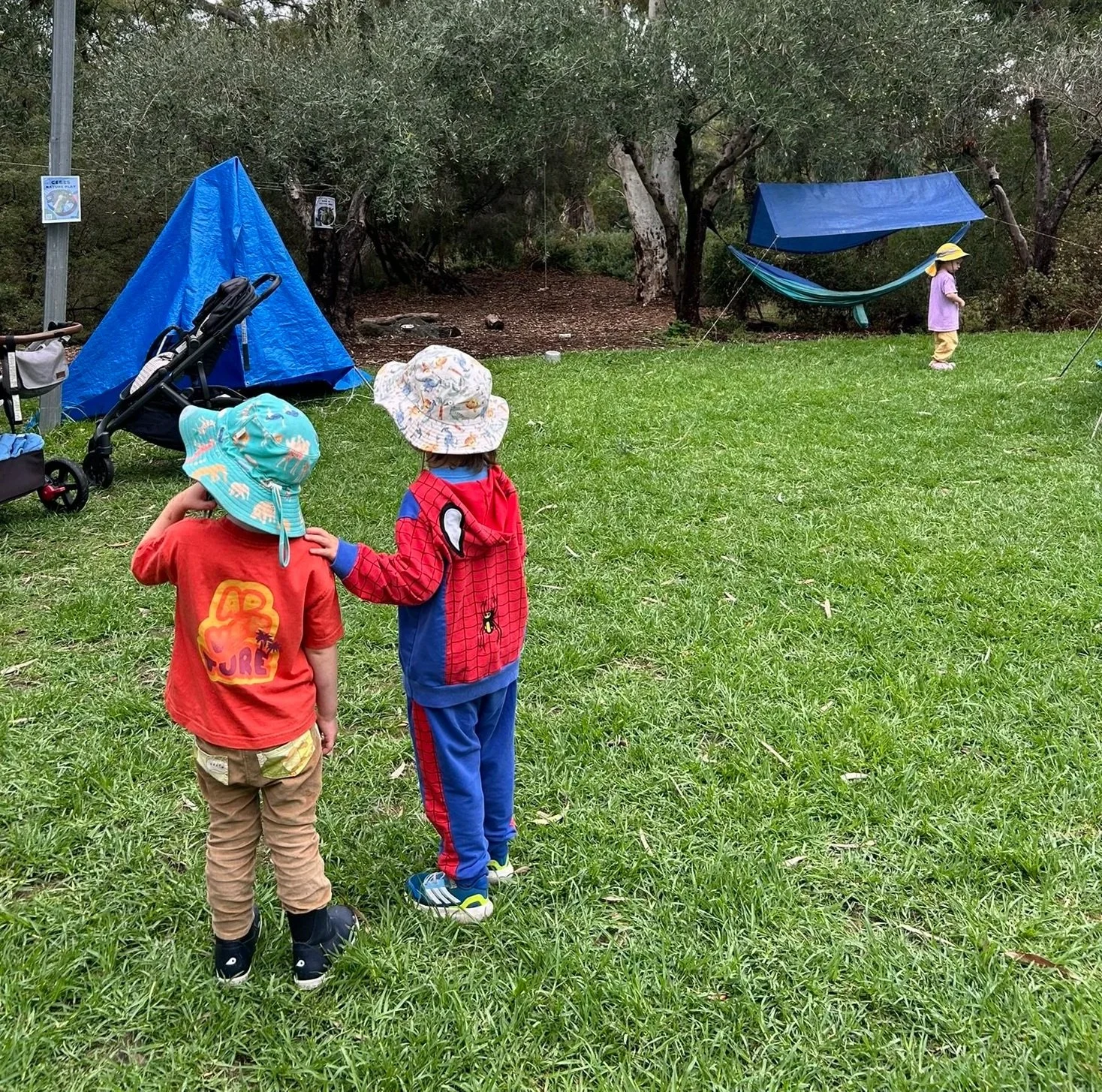
The morning grass glistened with dew as gentle rain fell at CERES Environmental Park. Different fragrances were heightened by the overnight rain, creating a sensory experience. Families weaved their way along the dirt paths that led to the eucalyptus green area- a meeting circle surrounded by plant life and scraggly, swaying, aromatic gum trees. It seemed like a fitting place to celebrate National Playgroup Week as so many of the elements of play and connection come to harmoniously unite in this setting.
“Kids love it. Kids love it whatever the weather,” said Jack, one of the playgroup facilitators.
“I love seeing the kids getting their fingers dirty and digging and exploring and slowly- because we run a termly playgroup- the kids are gaining confidence over time, getting to know their little rhythms.”
Stacey, a mother of two, made the trip from Caulfield on the other side of the city. She relishes the time out and about.
“Don’t let the chores at home stop you from going out because going out is so worthwhile for them and for you.”
Stacey has had an entirely different experience with her second born, having navigated the pandemic with her first. She can clearly see the benefit of the play and connection with others.
“It’s definitely been fun getting to meet people and watching babies interact, like they really want to interact with their peers already.”
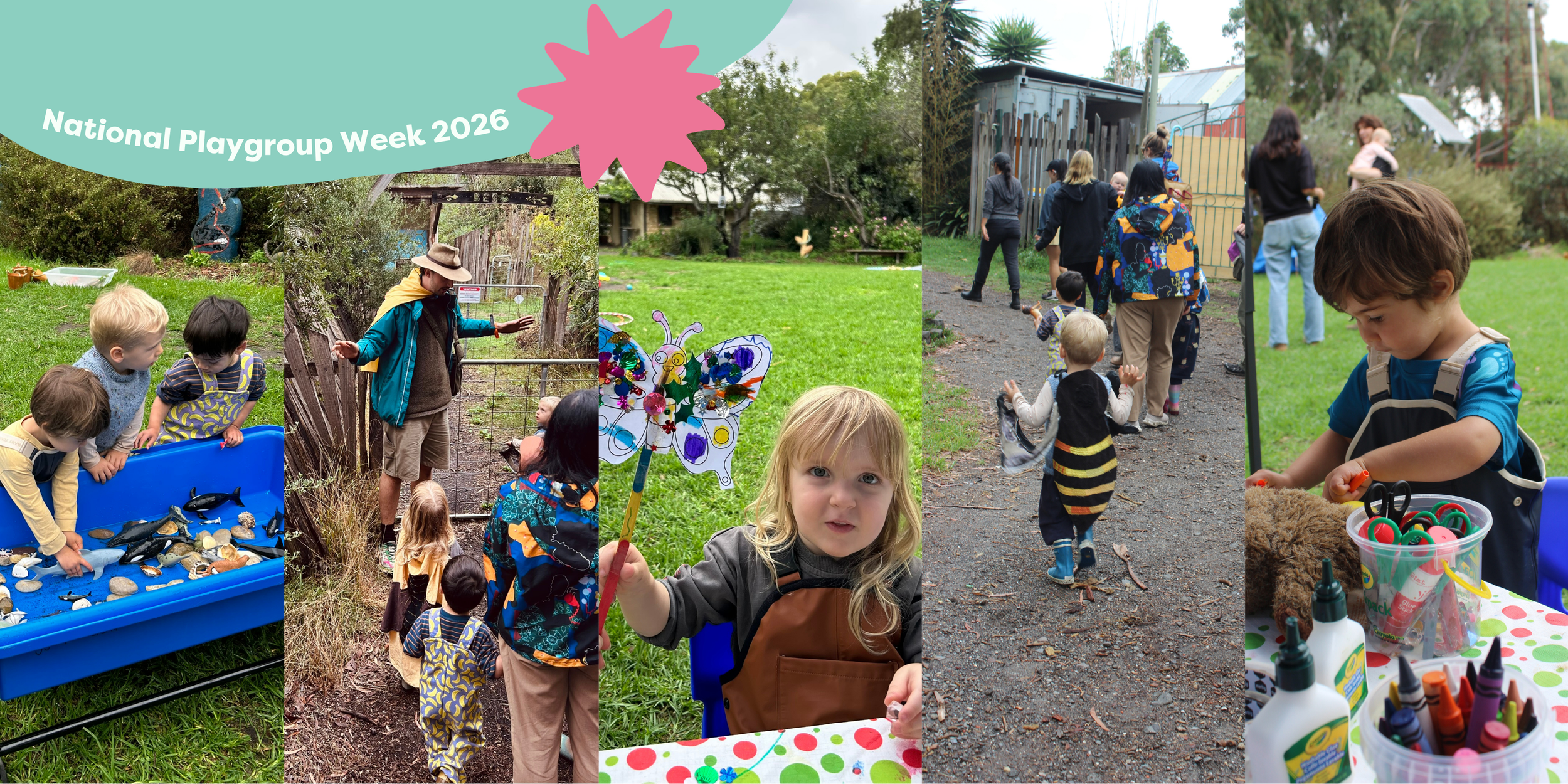
Thoughtful activities were set up, yet it was all a matter of ‘choose your own adventure’ for the morning bush playgroup. Babies were crawling up the stairs of the wooden gazebo to examine the brightly coloured books and toys while the older children were diving their hands into the water play area and racing along to the mud kitchen, holding Australian toy animals under their arms. In the background, two mothers converse in French, having met when hearing the accent and forming an easy point of familiarity. One of the playgroup facilitators also speaks French and knelt to chat with the French-speaking toddler who was busily talking about the colours and shapes at the crafts table.
There is so much to talk about in this naturally active, moving space and the adults freely chatter.
“I get to work face-to-face with other people- people connect way more quickly,” said Jack, “because I run a playgroup it is parents connecting just as much as the kids connecting.”
In another grassy corner of the playgroup, playgroup facilitator Liz echoes this sentiment.
“For me, when I talk to families, I say it is definitely for children to be able to connect and play but it is definitely for adults as well so that they have that connection.”
“A lot of stories I hear from parents, even when they talk about past experiences if they’ve got older children, they always talk about how playgroup saved them and it was actually something that they did to connect with others in their community- whether that community was something local or it was cultural, meeting up with someone from the same cultural group or even with a shared interest, like they went to their local bush playgroup because they are interested in nature and they found people that have similar interests and parenting styles and were able to then connect with other adults. I think it’s important for adults and parents, as it is the community, as it is for the children too.”
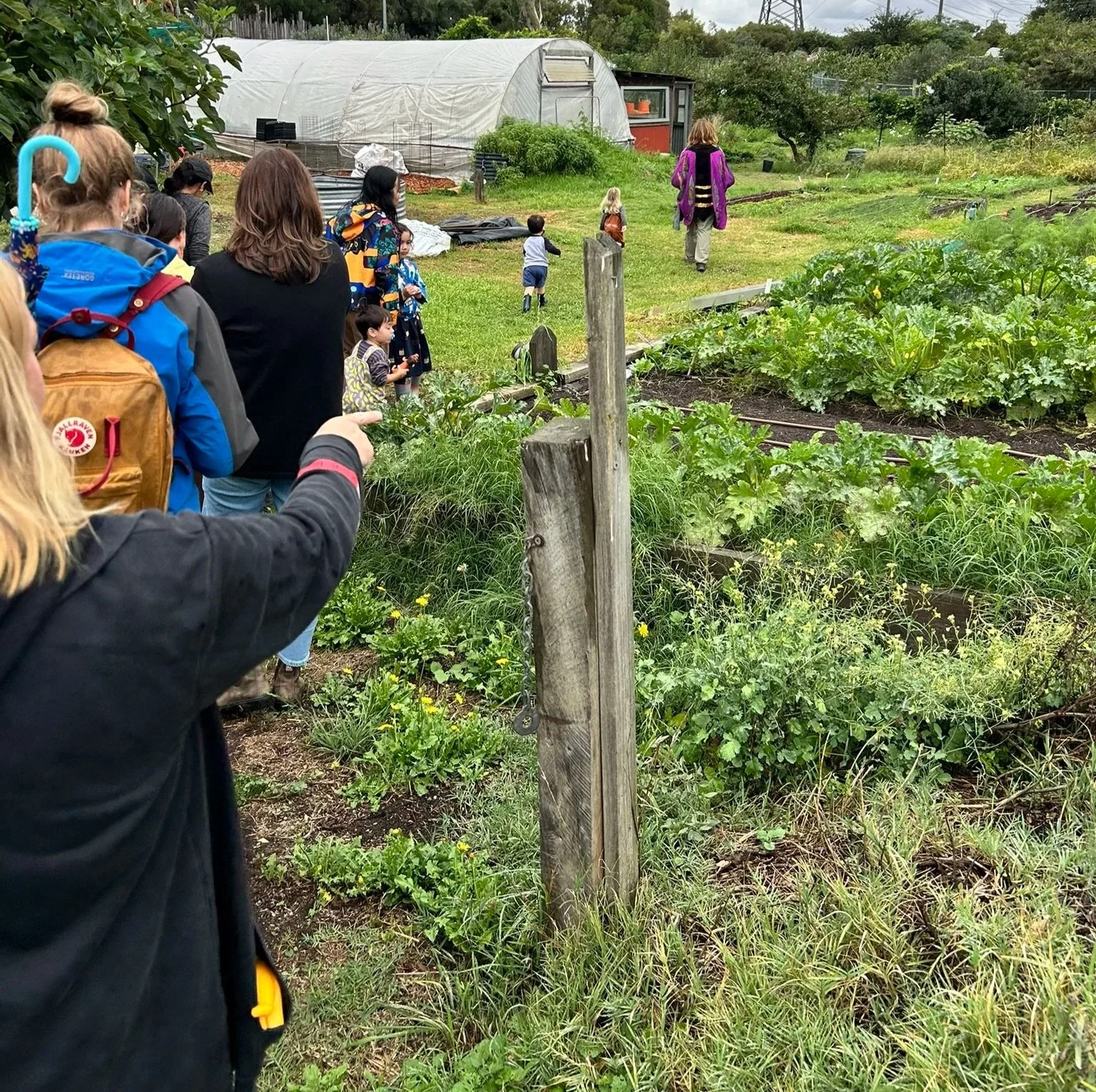
A highlight of the morning was the adventure walk. The children and facilitators got dressed up in bee costumes and capes, some with big colourful wings. They set off buzzing along the garden paths- past the pumpkins, the nasturtiums, the cosmos, the mint- and found the bee’s hive where facilitator Doug talked more about the lives and importance of bees. The children then explored the veggie patch and went on to feed the chickens with warrigal greens.
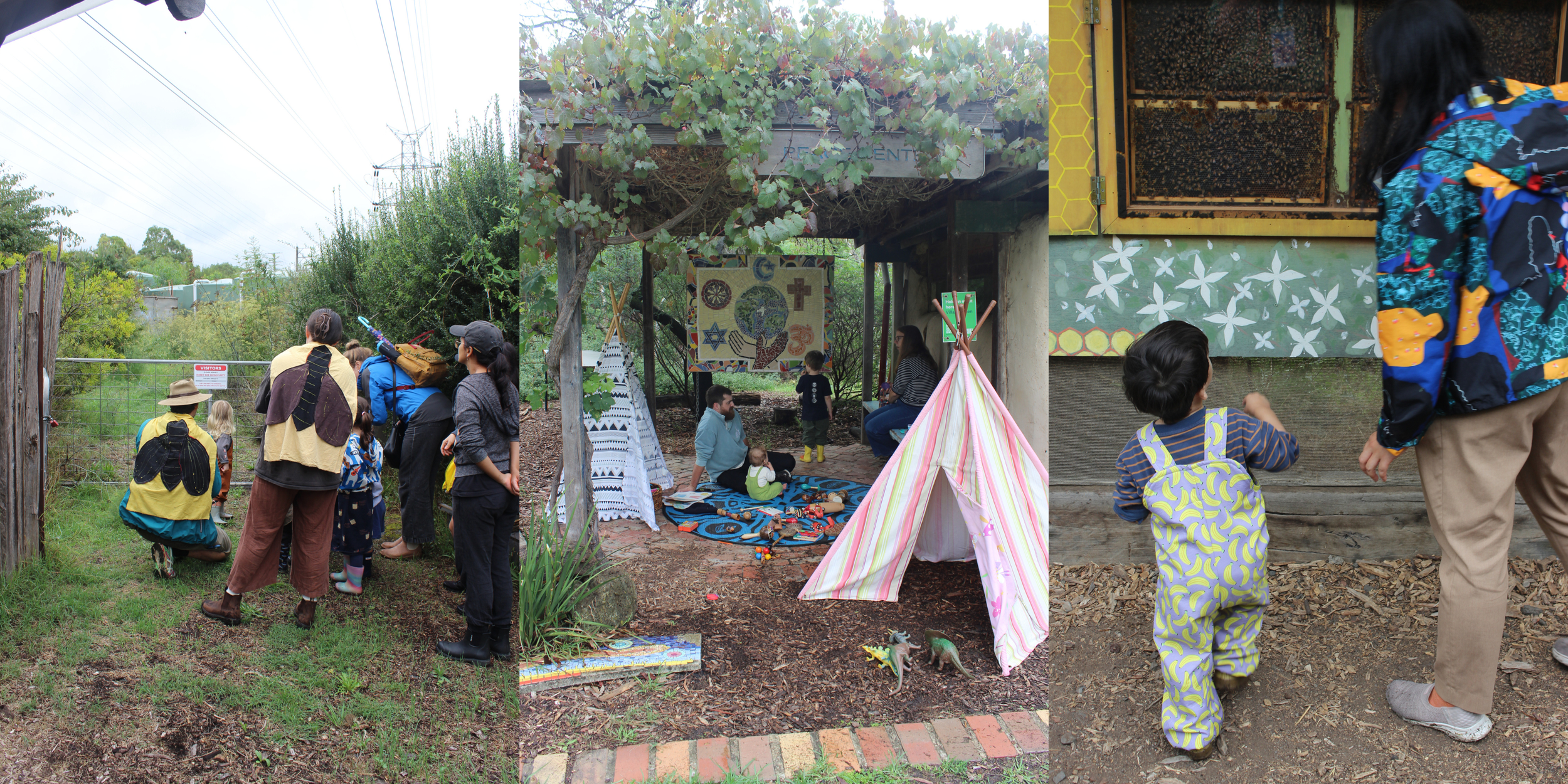
Diligent guide Doug is careful to avoid the stinging nettle and knows the remedy if anyone encounters it. He watches the learning and sees the ways that nature play shapes the children, reminiscent of the quote: ‘We could never have loved the earth so well if we had had no childhood in it’, written by George Eliot.
“The benefit of doing it in a wilder space like this is the uneven ground and the rocks and the sticks that we are encouraging them to play with are actually helping build that risk benefit analysis inside them,” said Doug, “so they will be more confident climbers and more stable runners and they fall down and when they do they build that resilience, they have just got all of the skills that they need to continue to grow to become the best possible version of themselves.”
Doug, originally from London, loves to be immersed in intergenerational relationships in natural spaces, experiencing the positive carry over effects.
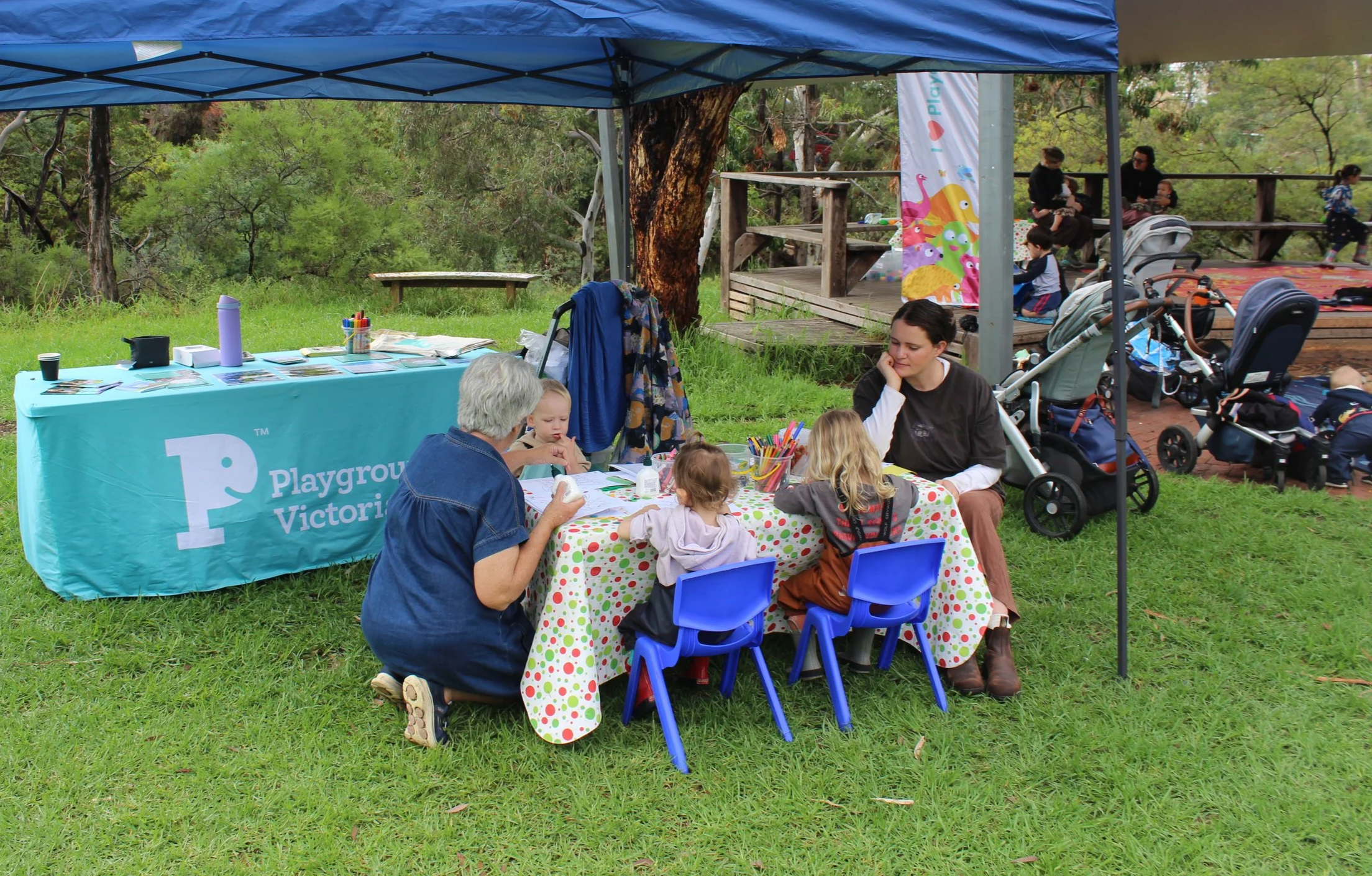
“There is a multitude of benefits really because you’ve got the community aspect which is so cool, you get to bring lots of people together and then you’ve got the benefits of being outside for natural engagement- in just playing in the dirt- and the long term benefit is to get people outside and getting them engaged in nature and getting them to build that responsibility so that when they grow up that have got that affinity and that ease in nature so they can be guardians, like we all want to be.”
Doug and Jack are present with the children all morning, playing and talking, creating possibilities. They loved running the group together.
“The best thing is seeing the kids gain confidence through nature,” said Jack.
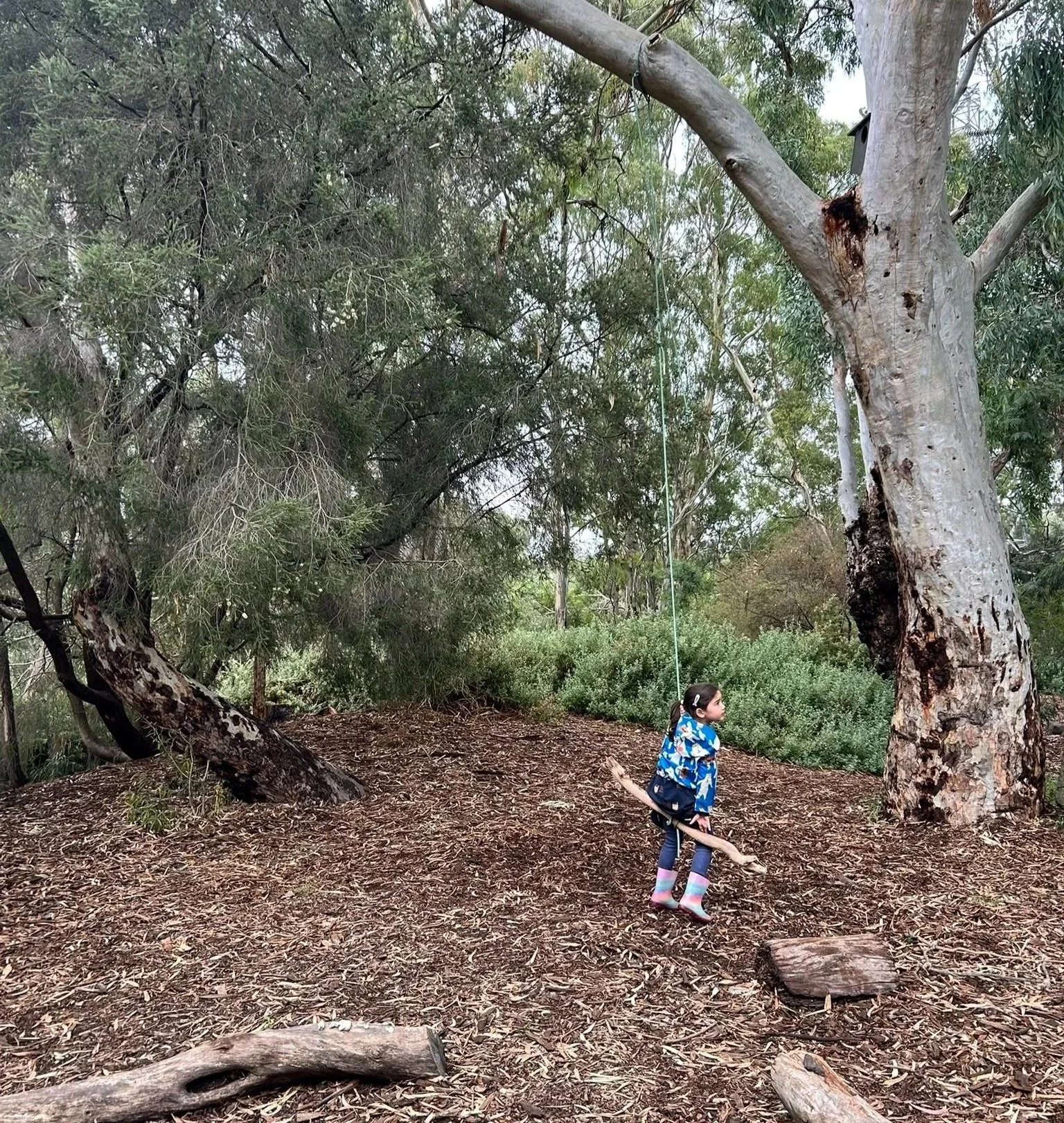
“I think when I’m in nature, when the kids are in nature, they sort of develop their own version of things and I think that’s really nice, I think that’s part of play to socialise with other kids and develop their own imaginary world, especially at this age.”
The possibilities in this living play space creates room for the children to experiment- with their ideas, their bodies, their voice, their words, their bonds with others. They have room, and while there is risk, there is reward.
“The importance of play- kids usually have stuff set out for them, stuff to do and I really like that but I really like watching them build their own imaginary play, build their own adventures, turn the little natural world around them into their own little magical playground,” smiles Jack.
Danny Schwarz, Playgroup Victoria’s CEO, a past teacher, drops in to spend some time with the group. He always enjoys seeing the power of play being honored and set free.
“That’s what I’ve loved- that’s what it is all about.”
“It has been an absolutely fabulous experience. The environment is just so perfect, you can’t believe it is so close to the city and it’s really lovely to see the parents and the kids just having fun and engaging together.”
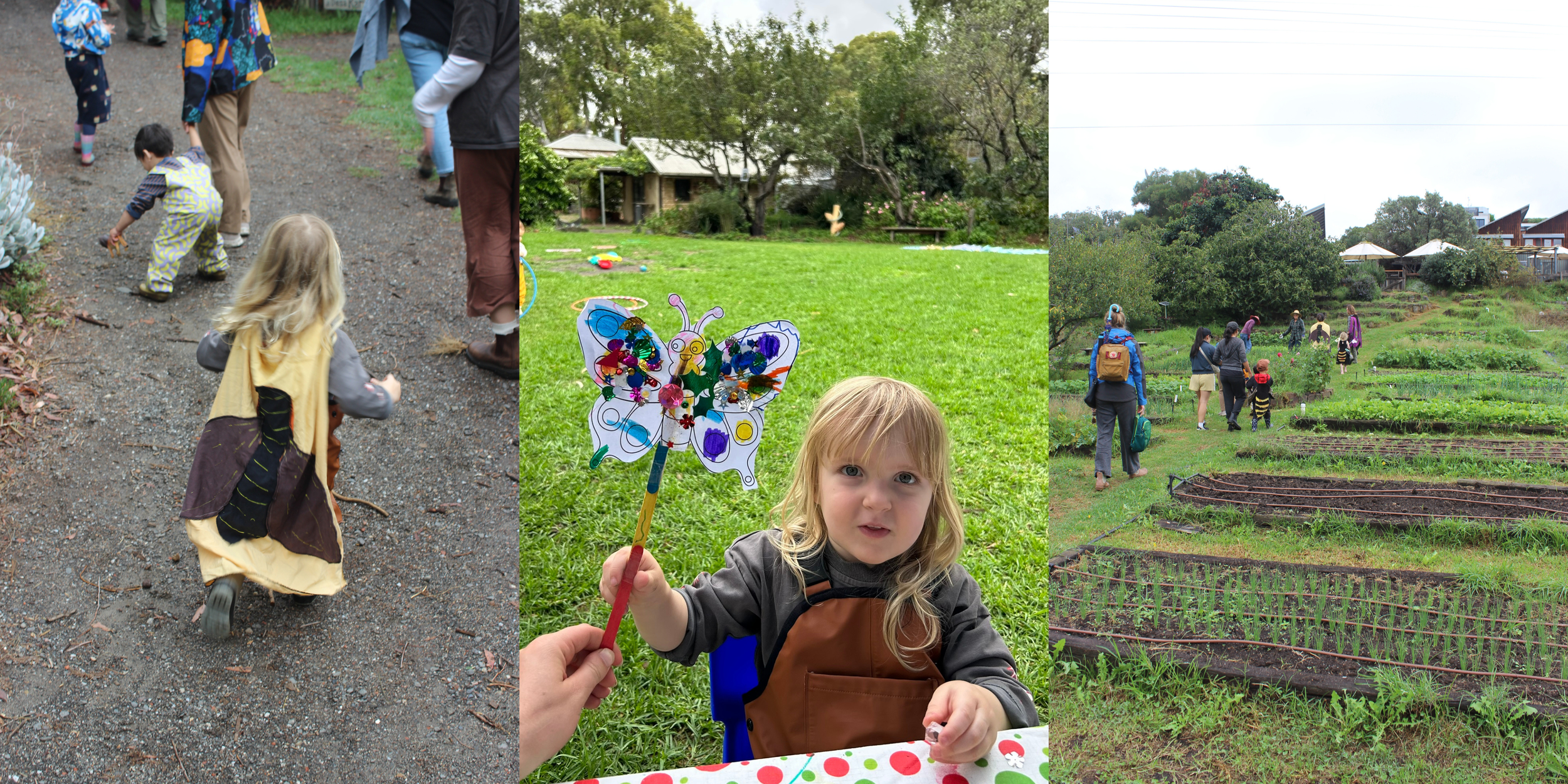
Looking around, after the early rain had passed and everyone had settled into their play, there was a content current, a calm. The soundtrack was laughter, birds, the trickling of the creek behind and conversation. One mother had not even known their was a playgroup running today. She remarked, “Well this was a lovely way that we weren’t expecting to spend our morning.” Her son had a ball. She caught up with a friend and chatted all morning with others. A visit to a playgroup can, and often does, change the atmosphere of the day.
“I think that play is a fundamental part of what we are as a species,” said Dough, “it is the process of how we engage with the world, it’s how we learn new things, it’s through games and as adults it is the way that we can help to strengthen our social structures with each other, where we are being in a space and playing with kids and we are playing with each other and engaging in the storytelling that comes with that is helping us bring both those together and build that community.”
Long may we find these playgroup spaces to play.
Find a Nature Playgroup Near You
Article by Sinead Halliday
Photography by Mylie Nauendorf