
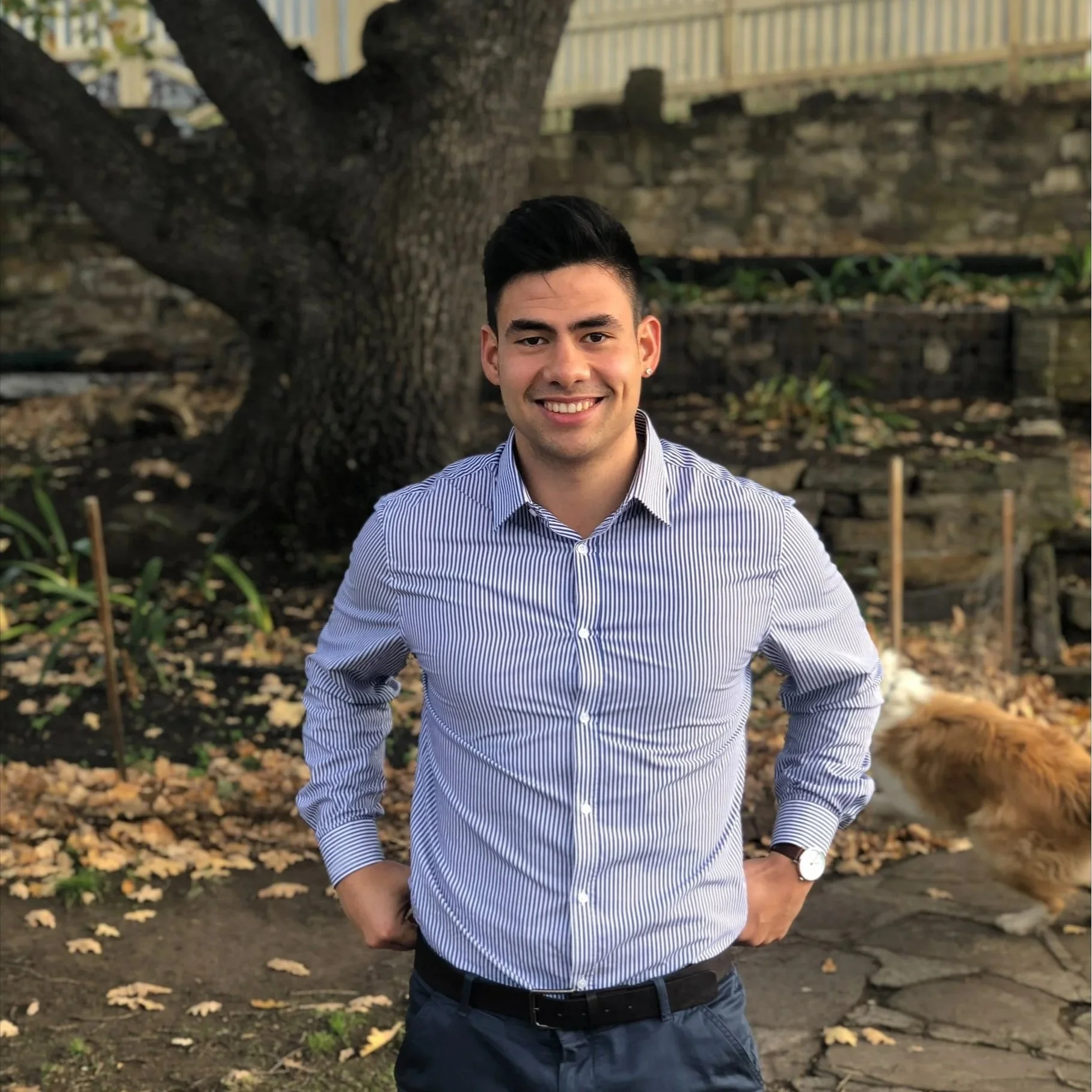
Chris Thongnoppakun has been part of the team at SNAICC, the National Voice for Aboriginal and Torres Strait Islander children, since 2024. Chris supports aboriginal community-controlled organisations (ACCOs) nationally to deliver a range of federally funded programs.
Chris grew up in Thailand and went to an international school where many cultures came together to learn, play and connect with community. He has worked in state and federal government and has a background in psychology.
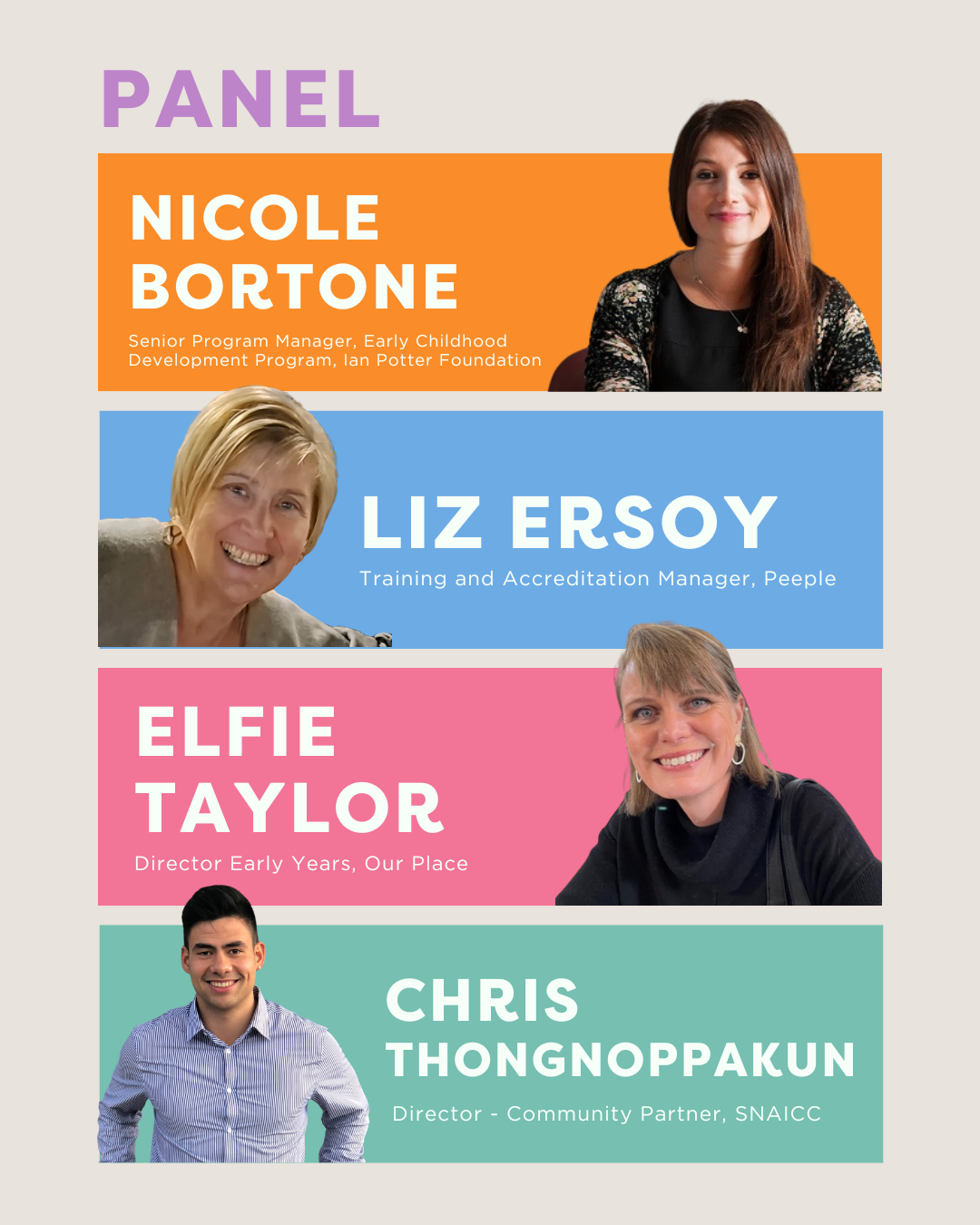
Chris will bring his voice to the Playgroup Victoria conference, where together with other panel guests, he will discuss how to achieve common goals through effective partnerships.
We spoke with Chris to gather more of his insights ahead of the panel conversation.
What were some of the defining parts of your childhood? What has helped to shape you?
Community and a collectivist culture was how I grew up. Something I did not appreciate until I grew up and look back.
“I went to an international school where 100’s of cultures were blended into everyday learning. This was the single most formative thing that happened to me.”
I learned the rich history, and of the recent atrocities, of Aboriginal and Torres Strait Island people as an adult, again, I did not have to unlearn any systemic racism. I’ve learned there are strong similarities in culture, for example, respecting and taking care of elders. Something we don’t see in western cultures, where you grow up, have your own family, and your parents, grandparents, sort of get forgotten. Instead, we look after our elders, as they did us.
What has the experience been like in your role at SNAICC?
Being a peak body, there is a strong sense of responsibility and accountability to the sector and the Aboriginal Community-Controlled Organisations (ACCOs) we represent. It is an incredible privilege to be a part of SNAICC.
What is the strength of the intergenerational relationships people share through time? In what ways do our Elders guide and support us through the chapters of life?
I think every so often there’s a breakthrough in early learning or health and wellbeing- often we can see these practices and protocols replicated in Indigenous pedagogy. What does this tell us? It’s about time our sector looks to Elders and old ways of raising little ones.
Early years spaces provide opportunities for meaningful exchanges, introducing the importance of culture and a connection to Country from an early age. In what ways have you observed young children engage with, and celebrate, culture?
“Aboriginal Children’s Day is a huge one. The First Nations Playgroup Pilot is another, we have some reps here with us today. Language, play, history, and stories are all ways we see our ACCOs ensuring culture is celebrated and unwavering in their little ones.”
At playgroup, parents and carers attend with their children. What learning opportunities extend to parents and carers in the playgroup space? What are they learning alongside their children?
Sadly, the intergenerational trauma and impact of removals are still felt by parents and carers. What we discussed earlier around truth-telling and de-stigmatising culture can be applied, almost with equal importance, to the parents and caregivers. This is something we see as second nature to our ACCOs. This is another reason why the holistic model of care for ACCOs should be considered in the prioritisation of funding.
In what ways can early years spaces help families to feel a sense of belonging? What kind of things make families feel acknowledged, welcomed and cared for?
My biggest takeaway from working in this space, across all levels, from an ACCO to the federal government is so much is relational based. Taking the time to build genuine connections goes so much further than any policy lever ever could. Showing up and doing better. I remember when I was in government, this was exactly the advice I gave to the Productivity Commission. How very bureaucratic of me.
What have you learned from other cultures over the years? Does an awareness of other cultures around the world deepen your sense of understanding and love for First Nations here in Australia?
“I have had the privilege of having some really close friends who are mob. The privilege of being mentored by a strong Aboriginal women in the early stages of my career. As I mentioned earlier, culture is something that is visceral to me.”
Honestly, it was not until I moved to Australia in 2009 that culture, or even racism, was ever verbalised or operationalised. It’s a strange feeling. I think it’s something you feel, and if you don’t, you just have to do better. Immerse yourself.
Often, playgroups get in touch, wanting to know how they can make meaningful connections to Country at playgroup. To anyone who feels unsure in their understanding of First Nations culture and customs, what would you encourage them to do? In what ways can playgroups deepen their understanding together?
Step 1, read up on cultural load. Step 2, connect with the local ACCO in your community. Step 3, reach out to us. I cannot emphasise this enough: LISTEN, don’t do to. Before you get frustrated because the local community isn’t engaged with your service… think about the true history of mob… then reassess, pivot, and try again.
Our upcoming conference has a strong focus on working together and collaborating. What benefits have you found, when people come together?
We are social creatures. The new world of tech connection has done something to our wiring. There is a different sense being able to be physically present with someone. We see the successes of hosting our National Gathering for Connected Beginnings or the SNAICC conference, which I highly recommend. When people are able to come together to share, yarn, learn, laugh, complain… it’s just different.
What do you think are some of the underrated qualities of collaborative work? In what ways can we enhance meaningful connections and help to create positive outcomes for families?
I think we underestimate how strong the impact can be when two or more people agree to, and commit to, an approach or an outcome. Again, it’s relational based. Short of a breach, there is not much that can’t be achieved when two or more parties viscerally want to achieve something. Obviously the scale of impact is correlated to the scale of power in the relationship. This is the dichotomy… We see this collaboration on the ground, but we need to see it more at the executive level.
Through your work, what have you found are some barriers to connection? How can the barriers be overcome? In what ways can we forge understanding and nurture a sense of identity and culture?
I think in this new world of Teams meetings, there is a lot of work about work and Teams meetings about emails and emails about Teams meetings. We need to resource face-to-face opportunities. Whether locally, or nationally.
Hear more from Chris as part of our panel event at the Playgroup Conference.
Article by Sinead Halliday
Photography courtesy of Chris Thongnoppakun
Artwork courtesy of SNAICC and Playgroup Victoria