
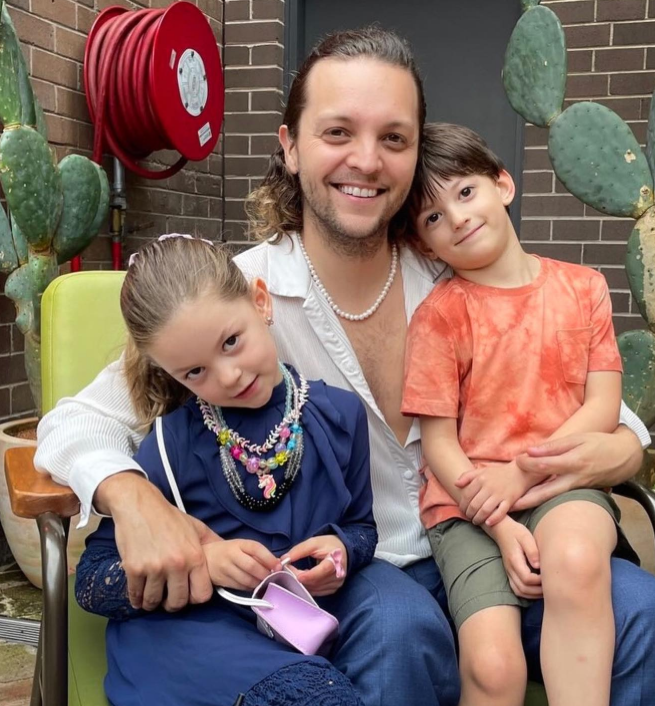
“I am reminded through them how important it is to remain silly and fun and carefree. As often as possible you get to choose to see the world through their eyes.”
Sean Szeps grew up in Colman New Hampshire, up near the Canadian border. His 20’s were spent in the eclectic streets of New York where he enjoyed spreading his wings and embracing different cultures and influences.
Flash forward several years and Sean now lives in Sydney with his husband Josh and their twin children, a boy and a girl.
Sean said that he wouldn’t suggest relocating with two-month-year-old twins to a place with no connections as he and his partner did, but they made it work. It has been a big adventure and learning curve along the way.
Reflecting on his early days in New Hampshire, Sean remembers a loving home where creativity was a way of life, as was practicality, a “Let’s see if we can make it” can-do attitude.
“When I think back to my childhood I just think of play, creativity, a lot music, a lot of dancing, a lot of arts and crafts, a lot of projects.”
Sean’s parents built and made things with their hands and so too did he and his siblings.
Instead of the old catch cry that “Life is short”, Sean said that there was less pressure to accomplish something quickly, but rather to hang in there, and get a little bit better everyday.
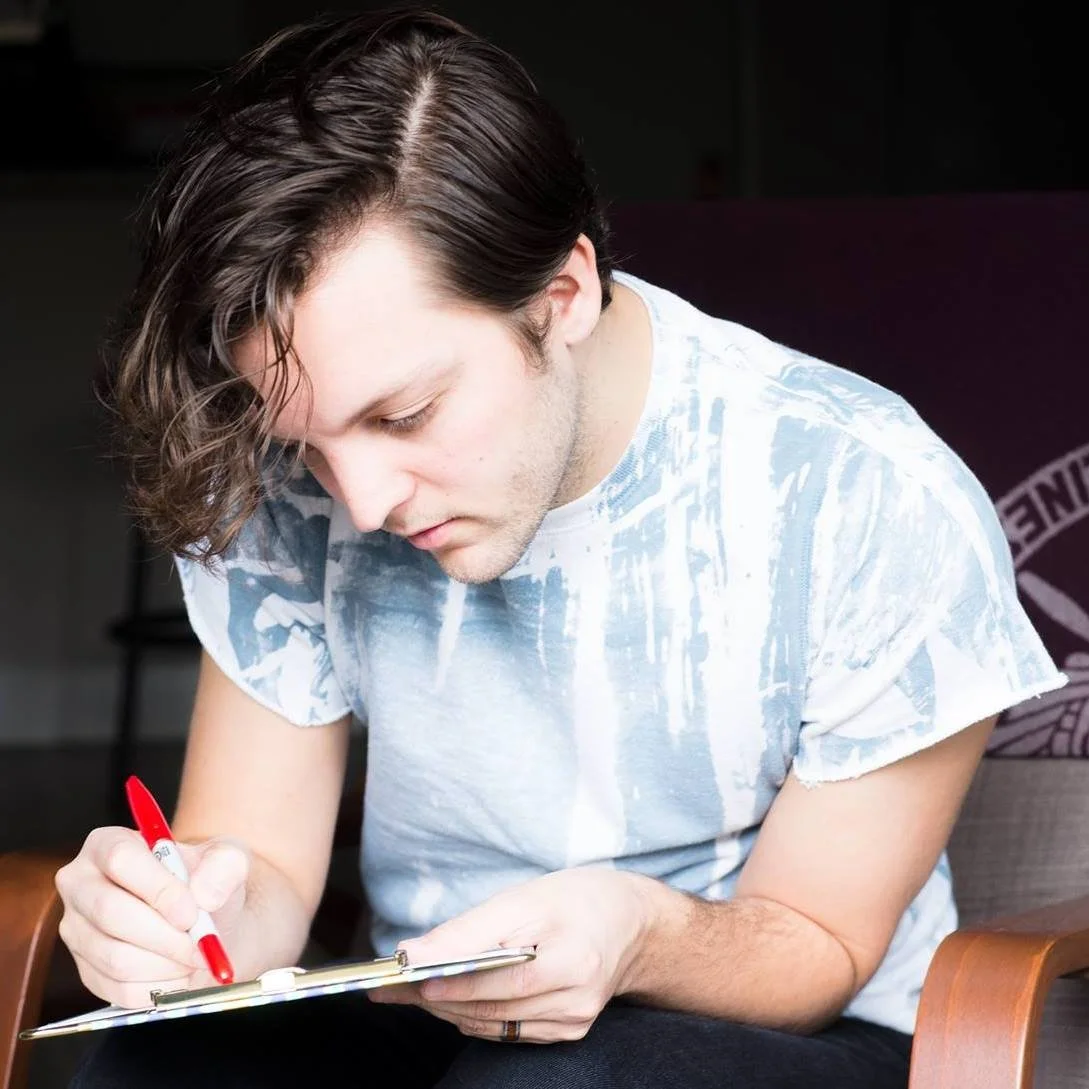
Instilled from an early age was the idea of possibility. Sean’s mum was all about effort, rather than necessarily being the best or succeeding.
“I think what’s come from that is a delusion that I’m capable of anything because I know”, Sean laughs, “I know I will be able to accomplish it with effort if I just try long enough.”
Sean is now a multi-creative force who hops between writing, podcasting, content creation and comedy, with a focus on parenting, wellbeing and equality.
Sean credits the great role models in his early years including his grandmother Abuela on his mothers side and Mimi on his fathers side. “Matriarchs. I was surrounded by that energy.”
Modelled to him was a healthy relationship between his mum and dad.
“My father really praised my mum a lot, he still does, so from a very early age, like a really early age, I was aware that the role of mother and the role of primary parent was a role, a really important role, something that was worthy of value and praise.”
Sean’s mum was a stay-at-home mum for the first 10 years of Sean’s life.
“I just have the fondest memories of her always being there, always the security of knowing exactly who to go to.”
Sean has carried those learnings into his own family life with husband Josh and their children.
“I remember thinking at a young age, if I had a choice between leaving my kids everyday and going to work in an office and coming home at the end of the day exhausted or spending the day with my kids and shaping the next generation, I was just drawn to that option, I just thought that was really special.”
Sean is a big advocate for taking time to nurture yourself- spending time with friends, exercising and carving out time for partner dates. He has regularly attended therapy for over half of his life, even when things are going well, in an effort to keep things steady.
“We are better parents when we are at our best, when we have provided self-care for ourselves.”
“Locate the things that you loved before, and what you can do after you have kids- find the stuff in the middle,” encourages Sean.
“If you love yoga, that brings you joy, go to the yoga studio, introduce yourself, ask people if they want to have coffee afterwards. If you haven’t painted in ten years and you wish you could, take a painting class once a week and also look for groups that are specifically for parents if that’s something that is important to you- run clubs or fitness groups that have creches. I really think you have to hustle and it’s really annoying in the short term but in the long term gosh it makes parenting literally 100 times easier.”
Sean is the type to try new ways of doing things and keeping an open mind as he goes.
“It’s really easy to be stuck in kind of an echo chamber, surrounded by people just like you, who grew up in a place just like you and when you force yourself to sit in the discomfort of the fact that maybe your way is not the only way and even if it is it might not be the best way, I just think it is such a great gift for you and then when you are raising tiny humans, you are passing that onto them too.”
“They don’t have to have kids. I think we fall into a trap of thinking, ‘When I become a parent, I must find people who also have kids who are the same age’- sure there are benefits to that but what’s more important is finding people who are like-minded. So many of my best friends still don’t have children, and many of them do, but I was chasing what we had in common.”
When Sean first arrived in Sydney, he was a new father facing sleep deprivation, running alongside a lot of newness. There were mothers groups for women with new babies but for new dads, it was trickier to find a space to catch-up.
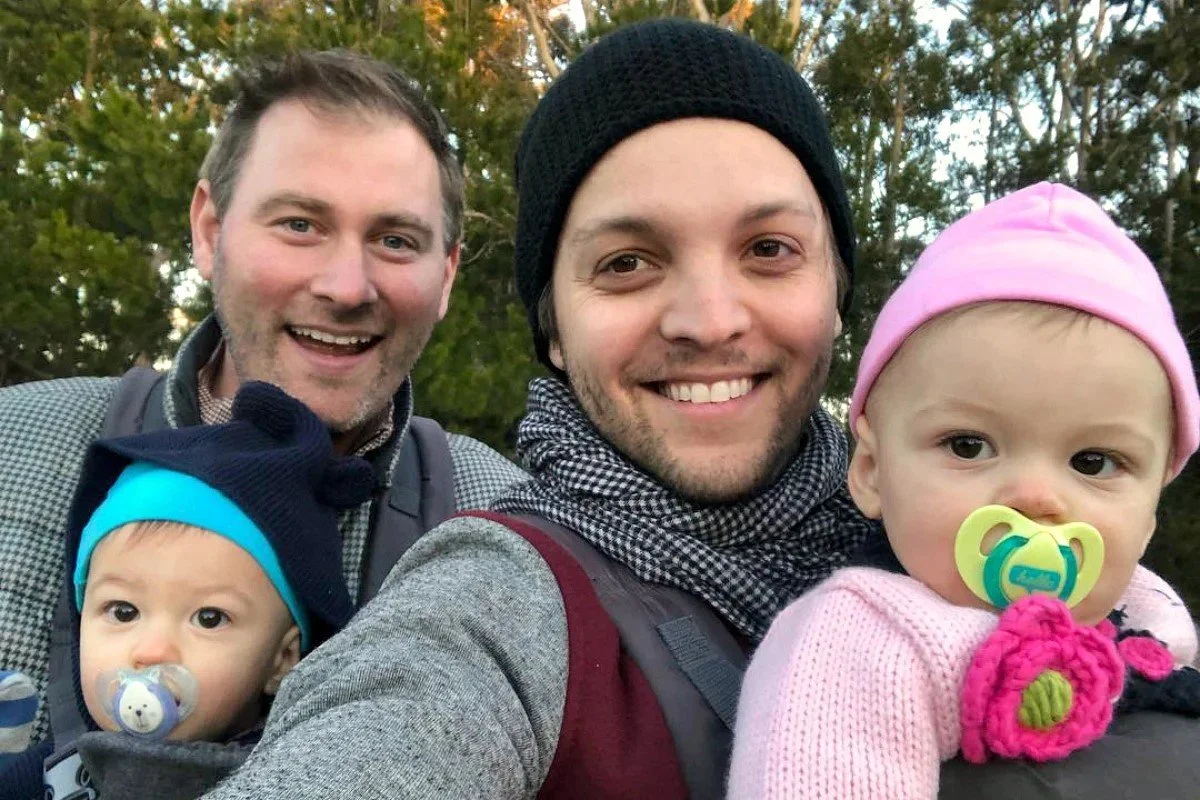
“Having a feeling of being ostracised as a ‘mothers group’- they rejected me and they had really good reason- we are talking about the nuances and intricacies of motherhood about that with a guy.”
Sean said he totally understands but did wonder where he could find his own sense of place of connection and support as a new dad.
“If we take gender out of it, not all of them are parents, there are lots of grandparents helping out and there are aunts and uncles and nannies and babysitters. What’s most important is that we are able to support anyone transitioning into a new role post-natal.”
Sean said, “slowing the tides turning” and there are more spaces for parents and carers to access support services. He is ever grateful and still regularly hears from parents inviting him to be part of their early years group.
Reflecting back, he just wishes he could have connected with a group of like-minded others earlier, as an added support.
“I absolutely know that when I was struggling, if I had just been showing up or rocking up once a week to a group of humans who have children around the same age, then I probably would have had the courage to be like, ‘Is it normal to think the thoughts that I’m having in my head?’ and then maybe I would have got help.”
Sean had post-natal depression and thankfully sought help. It wasn’t an easy time. Then it took time to rebuild and reconnect.
Sean encourages an open dialogue. Checking in with your partner, once a week: “and all you have to say is, ‘How you doing?’”
The village of old has changed in many ways, with the proliferation of online apps and a modern lifestyle where people don’t always know their neighbours, yet as Sean can attest, it is still an essential component of parenting and caring, to have a village of support.
“Oh gosh It just makes parenting 900 times easier when you are running late ten minutes because your meeting ran over and you can text the group chat and say, ‘Hey can someone grab my kid.’”
“It’s not easy is it, it’s not easy for adults to find new friends, it’s not easy to utilise old techniques for how you might of met people- even though you are changed and you are different and your circumstances are different, you are lugging tiny humans around so you’re not going to a bar or maybe a workout class or meeting a friend at Uni and so for many of us, the transition into parenthood is trying to relearn who we are while also trying to relearn how to meet people and make connections so that’s hard. The boring answer is, you have to put in a lot more effort than you want to and that you’re probably emotionally incapable of because you’re sleep deprived.”
“If what you know to be true, is that people around you makes parenting easier, and I can confirm, and I think anyone with children will confirm, that that is the case.”
“It’s never too late to put yourself out there.”
Then there is the joy, the many layers of joy that parenthood and caring for children bring: the fun, the wonder, the affection, the unconditional love, the humour which Sean brings to the fore in his comedy videos.
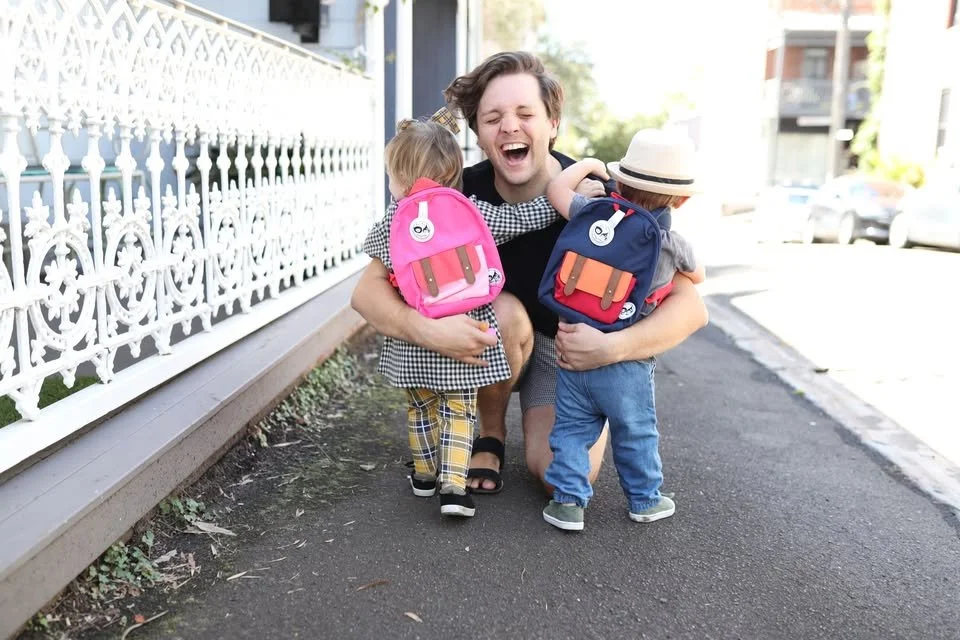
“I think it is a great gift in general to be reminded as often as possible what it is like to be a kid because we lose so much of that play, creativity, humour, silliness but also acceptance and I think if we choose to listen and pay attention, and watch, it’s like one of the greatest gifts you can give yourself as an adult.”
“I think it is one of the most special parts of becoming a parent is you are just reminded of your youth and then you can link up with it again, that’s what I do.”
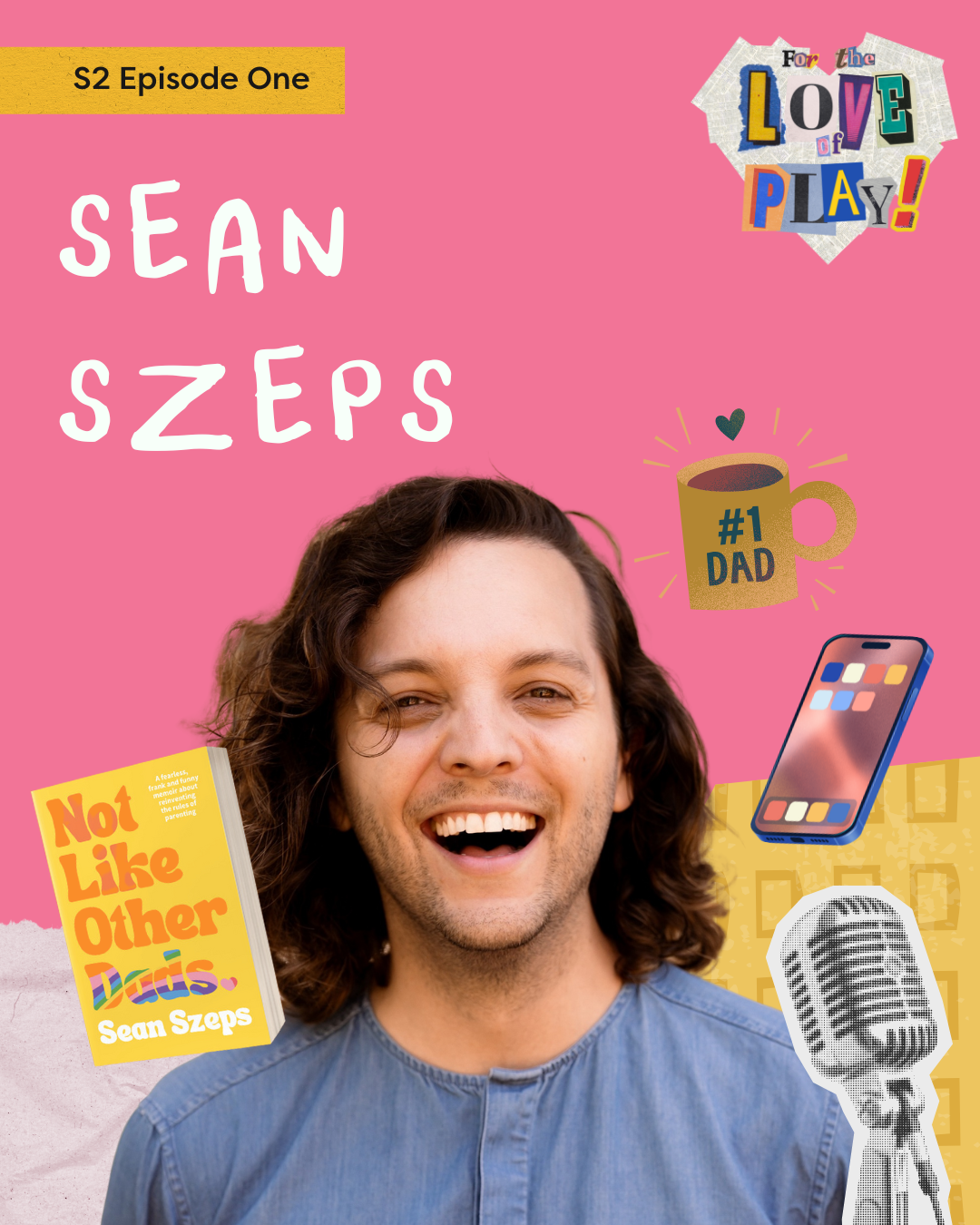
Hear Sean in Conversation on the podcast, For the Love of Play.
Article by Sinead Halliday
Photography courtesy of Sean Szeps