

“One of the biggest things I’ve learned is just how central parents and caregivers are to children’s outcomes from birth. While a lot of the sector’s focus is on formal early learning settings, the home is still the most consistent and influential environment in a child’s early years — and it’s one of the most powerful, yet under‑used, levers.”
Nicole Bortone is part of a big Italian family. She is a big sister to her two younger siblings and the eldest grandchild. Being around children and supporting family has always been a big part of her world. It was a natural progression to explore more of the early years in her academic work.
“I consistently focused my assignments on early years policy and became really interested in how early experiences shape long term outcomes,” said Nicole.
Before joining The Ian Potter Foundation, Nicole spent eight years working at her local library service.
“I loved seeing children come through the doors- faces beaming as they borrowed new books or DVDs, singing along at baby rhyme time and settling in for story time with their families. Those everyday moments really highlighted how important play, reading and connection are in the early years.”
For 15 years, Nicole has visited and engaged with many child and youth focused programs as part of her role at the Ian Potter Foundation, where she oversees the Early Childhood Development grants program. She describes these interactions with families and organisations as a ‘privilege’. Nicole’s on-ground involvement has deepened her understanding of the sector. Now, as a mum to two young girls, the work feels ever more personal.
“Together, these experiences have shaped a strong commitment to the early years and to giving children and families the best possible start in life.”
Nicole will be part of the upcoming panel event at the playgroup conference. We caught up with Nicole to learn more about the meaningful work carried out at The Ian Potter Foundation and the early opportunities that are created for families in local communities across Australia.
For people who may not be familiar with The Ian Potter Foundation, how would you describe what the Foundation is all about? What is its purpose, its overarching aim, and what does it ultimately hope to achieve through its philanthropic work?
The Ian Potter Foundation is one of Australia’s major philanthropic foundations. Established in 1964 by Sir Ian Potter, it supports excellence and innovation across the country. At its core, the Foundation is driven by a vision for a fair, healthy, sustainable and vibrant Australia, with its work is organised around these four pillars.
The Foundation funds not‑for‑profit organisations across six program areas:
• Fair: Community Wellbeing and Early Childhood Development (ECD)
• Healthy: Medical Research and Public Health Research
• Sustainable: Environment
• Vibrant: Arts
Across all areas, the Foundation has a strong focus on prevention, and long-term impact. It supports organisations that demonstrate excellence and innovative thinking, values collaboration and looks for projects that can be sustained beyond the life of the grant. The aim is to create meaningful, lasting change and contribute to stronger, more resilient communities.
Within the Foundation’s work, how does the Early Childhood Development program specifically aim to improve outcomes for young children, particularly those who are developmentally vulnerable?
The Foundation has had a dedicated Early Childhood Development program since 2016.
“It is informed by a robust evidence base highlighting the importance of the early years as a critical window for brain development and the effectiveness of investment in early childhood development systems and services.”
The program aims to improve child development outcomes for children aged 0–8 particularly those who are developmentally vulnerable. It supports a mix of targeted and universal initiatives, with an emphasis on innovative approaches led by communities, scaling effective evidence‑based models, and strengthening and better integrating early childhood systems.
Guided by ARACY’s The Nest framework, the program takes a whole‑of‑child approach, recognising the role of families, communities and systems in supporting children to thrive. Funding priorities include improving access to high‑quality early childhood education and care, supporting the early years workforce, and building the evidence base through shared measurement and rigorous evaluation. A strong focus is also placed on initiatives that actively engage and support parents and caregivers.
Given the Foundation’s focus on early intervention and improving developmental outcomes in the early years, how do playgroups fit within this approach. Why has the Foundation supported playgroup initiatives as part of its Early Childhood Development program?
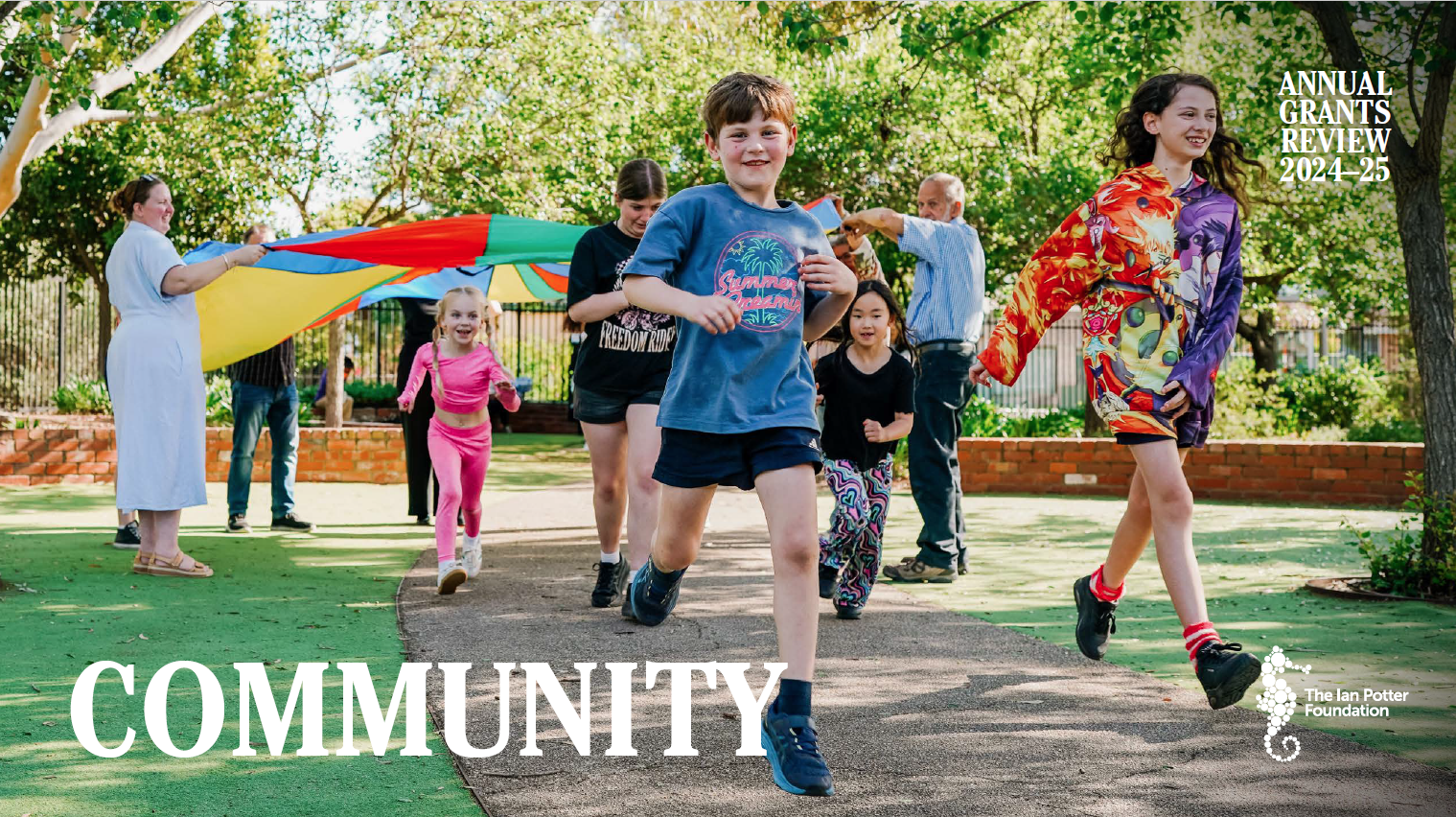
“Playgroups are a long standing and important part of the early childhood ecosystem, offering accessible, play-based environments where young children can learn and develop. Through shared play and interaction, children build social, emotional, cognitive and executive functioning skills that support school readiness.”
Playgroups also play a key role for parents and caregivers, creating space to be actively involved in their child’s learning while building confidence, relationships and a sense of community.
There is strong evidence of the value of playgroups. Children who attend are more likely to start school developmentally on track and playgroups help reduce social isolation, strengthen local connections and provide a welcoming entry point for families who may not otherwise engage with early childhood services. Their long history and broad national reach further highlight their importance within the early years landscape.
We are proudly currently providing capacity-building funding to Playgroup NSW and the broader playgroup network to help evolve, strengthen and grow playgroups across Australia, reaching more children and families. This $1 million investment over five years reflects the Foundation’s recognition of playgroups as an effective, evidence‑based way to support early development, strengthen families and enhance community wellbeing.
In what ways do the projects the Foundation supports help to break down the complex cycle of intergenerational disadvantage?
Several of the Foundation’s program areas support projects that address intergenerational disadvantage, including Community Wellbeing, Public Health and Early Childhood Development. Across these areas, the focus is on community‑led approaches that are preventative, collaborative and designed to create lasting change.
To amplify the impact of this grantmaking, the Foundation is also a member of The Investment Dialogue for Australia's Children (IDAC). IDAC brings philanthropy, governments, communities and delivery partners together to help tackle entrenched disadvantage for children, young people and families. The collaboration exists to help partners bring resources together in ways that would otherwise not occur making it easier to share evidence and insights, align investment and work collectively on the changes that matter most for children and families.
In what ways can we enhance the evidence base in the early years? For instance, we know the power of play-based learning in the early years of life. In what ways can play be recognised as a key learning tool?
Strengthening the early-years evidence base starts with good evaluation, but it also means learning from the everyday, community-based settings where children and families already engage such as playgroups, libraries and early childhood education and care.
To elevate play as a recognised learning tool, we need to keep building the evidence and ensure its translated into both practice and policy. This includes embedding play-based approaches in early years curricula, equipping educators and parents with knowledge about how play drives learning, and collecting data from community settings that demonstrates the developmental gains associated with play.
The Foundation previously funded a website called Play and Learn Together which curates highly quality play-based resources and activities for families, helping to turn evidence into everyday practice.
What have you learned about the parent and child relationship during your time overseeing the early years programs at The Ian Potter Foundation? What is the benefit of fostering parental engagement in their children's learning and development from birth?
One of the biggest things I’ve learned is just how central parents and caregivers are to children’s outcomes from birth. While a lot of the sector’s focus is on formal early learning settings, the home is still the most consistent and influential environment in a child’s early years- and it is one of the most powerful, yet under‑used, levers.
Even as participation in early childhood education and care continues to grow, young children still spend most of their time with their parents or caregivers. That means the early home learning environment really matters.
For this reason, the Foundation places a strong emphasis on programs that support parental engagement in children’s learning and development. In 2024, we ran a targeted grants round focused on parenting. One of the grants awarded in this round was to the Parenting Research Centre, who are working with Playgroup Victoria and Our Place to map the breadth of home‑based programs across Australia to build the evidence base and inform a more coordinated approach to supporting parents.
As a mother of two young children, what has your personal experience brought to your professional understanding of parenthood and all that comes with it?
Becoming a parent has added some lived experience to my professional understanding of the early years. While the Foundation’s work is evidence informed, having two young children has given me firsthand insight into the everyday realities families navigate- the joys, the tantrums, the unpredictability and the juggle.
It’s reinforced for me how important it is to support parents as children’s first and most influential educators and to support programs that are practical, respectful and genuinely meet families where they are.
How does The Ian Potter Foundation work with community-based initiatives, and in what ways does it support smaller or grassroots organisations?
“The Foundation supports community‑based initiatives by backing organisations that are genuinely community‑led, deeply embedded in place and working collaboratively to create long‑term change. We encourage all organisations that meet our funding guidelines to apply and some of the most meaningful impact often starts with smaller, grassroots groups that are closest to families and local needs.”
We have a long history of investing early in these organisations- giving them the time and space to test ideas, build trust in their communities and strengthen their models. Alongside place-based initiatives such as Tomorrow Today Foundation, Children’s Ground and Logan Together, we also support sector‑strengthening work through initiatives like PLACE Australia and the National Child and Family Hubs Network.
Beyond funding, the Foundation provides non‑financial support to our grantees by convening partners, offering advisory and evaluation support, and connecting organisations with broader networks and like‑minded peers.
What benefits do you see in community collaboration and partnerships, and what are you looking forward to sharing about their power at the upcoming playgroup conference panel?
Collaboration is one of the Foundation’s long-standing funding principles; every grant we fund whether to an intermediary or to a community-based organisation is working in partnership with others. In early childhood development, no single organisation can tackle childhood inequities on its own, so partnership is essential. When communities, practitioners, researchers and systems work together, programs are more connected, more responsive, and better grounded in what families actually need.
Co-designing with communities helps ensure initiatives are locally relevant, culturally safe and able to reach families who might otherwise miss out. Collaboration across services also reduces fragmentation, making it easier for families to navigate early childhood, health and social supports. Models like child and family hubs show the power of bringing services together in one welcoming, community-based ‘space’.
At the playgroup conference, I am looking forward to moderating a panel with representatives from Peeple UK, SNAICC and Our Place and learning about how their real-world partnerships have improved outcomes for children, families and communities and unpacking some of the challenges and learnings along the way.
Book to Join the Playgroup Conference
Learn More About the Ian Potter Foundation
Article by Sinead Halliday
Imagery Courtesy of the Ian Potter Foundation