
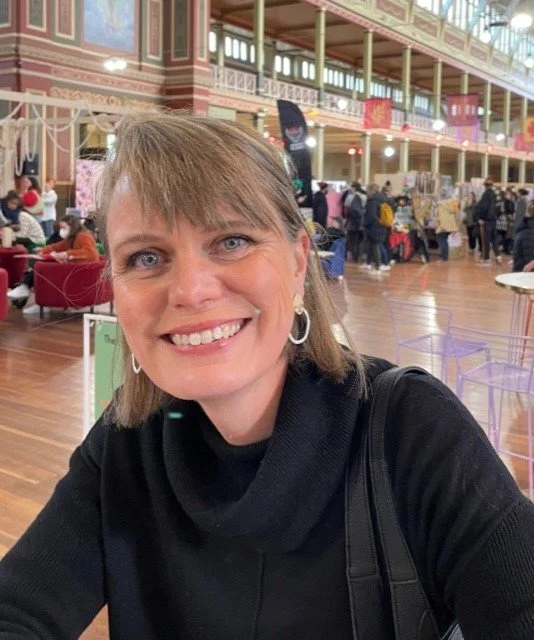
Elfie Taylor once greeted the little pitter patter of feet and wide-eyed wonder of children as a kindergarten teacher. She engaged with the parents and carers, knowing full well how much they cared and loved their kids. She saw the emotion, stemming from the newness of it all. She observed the power of a child’s imagination and their natural scope for play. They read stories, enjoyed crafts, played and developed together. Elfie also got to know the families and had a window of insight into the personalities, vulnerabilities and the challenges along the way.
She said that it grounded her in the everyday realities of children, educators and families.
“You see quickly that children don’t arrive in settings as blank slates. What’s happening at home, in health, and in family life shows up in learning environments every day.”
Ever since her kindergarten days, Elfie has branched out in various roles in the early childhood space.
Elfie has worked as a practitioner and within state government, helping to shape early childhood policies. Working in government gave her an an understanding of how policy is developed and within that, the constraints decision-makers are met with and the challenges of translating intent into practice at scale.
“It helped me understand why some reforms embed and others struggle once they reach the ground.”
Now, Elfie shares her learnings and perspectives, focusing on advocacy and place-based reform at Our Place.
“At Our Place, the work is focused on strengthening how early years systems work together- across education, health and family services- so children and families experience continuity rather than fragmentation.”
Elfie will contribute to a panel discussion about collaboration and effective partnerships at the upcoming Playgroup Conference.
We spoke with Elfie to get to know more about her work and her passion for the early years ahead of the event.
In what ways can we make it easier for families, particularly disadvantaged families, to navigate early years services?
One of the biggest challenges families face isn’t a lack of services, it’s how hard those services are to navigate.
Families are often expected to know who to go to, when, and for what. They are asked to retell their story multiple times, fill out forms, attend appointments in unfamiliar places and work out how different services fit together, all while managing everyday life.
At Our Place, we work to flip that experience.
Rather than expecting families to navigate the system, we focus on how the system can organise itself around families. That’s where the idea of GLUE comes in, the connective work that helps families access the right support at the right time, without unnecessary friction.
This means:
· Using trusted, familiar settings like playgroups as starting points
· Creating warm pathways between services, rather than formal hand-offs
· Supporting relationships between practitioners so families don’t have to join the dots themselves
Playgroups are particularly important in this. They are often the first place families engage outside the home and provide a safe, non-stigmatising environment where trust can be built early. When services connect in through places families already trust, navigation becomes simpler and support feels more accessible.
Ultimately, making it easier for families isn’t about simplifying families- it’s about simplifying systems. When services work together with shared purpose and responsibility, families experience continuity rather than fragmentation. And that’s when early support is most effective.
Family wellbeing is central to your work. How do we build capacity and genuinely empower parents and carers?
At Our Place we start by recognising that parents and carers are already doing the best they can with what they have.
Empowerment doesn’t come from instruction. It comes from walking alongside families, building trust, reducing barriers and making support feel safe and accessible.
Capacity grows through everyday interactions:
A trusted conversation at playgroup
A warm referral rather than a form
Being welcomed back, even after disengagement
When families feel respected rather than judged, confidence grows. Families who feel supported are also more likely to seek help earlier, before challenges escalate.
How can we better support developmentally vulnerable children?
The key is early identification, without stigma.
Developmental vulnerability often presents quietly, through language delays, regulation, social confidence or health needs. Universal settings such as playgroups, early learning services and maternal and child health are well placed to notice these early signs.
Support works best when families can easily connect with:
Maternal and Child Health
Community nursing and allied health
Early learning and play-based programs
Family support and parenting services
The challenge is not the absence of services, but fragmentation. Families should not have to repeatedly navigate systems or retell their story. Systems need to do more of that work on their behalf.
In what ways do playgroups support lifelong learning?
Playgroups are often underestimated, yet they are one of the earliest universal entry points into the local service system.
They support children to develop communication, curiosity and social confidence through play. Just as importantly, they support parents to understand their child’s development, connect with others and access support early.
“Learning begins in relationships- in the home and community- well before school. Playgroups strengthen that foundation.”
How do local playgroups support family health and wellbeing?
Playgroups are trusted, local and relational- and that matters.
When well supported, they:
Provide low-pressure entry points to services
Normalise help-seeking
Reduce isolation
Identify emerging needs early
They meet families where they are, rather than where systems expect them to be.
How does Our Place work with local playgroups?
At Our Place, playgroups are foundational to the approach. We would not consider it an Our Place site without one.
“Playgroups are often the first place families engage outside the home- before early learning, before school, and sometimes before formal health services. This positions them as a critical anchor for trust, connection and early support.”
We work to ensure playgroups are intentionally connected to schools, early learning, health and family services. In practice, this involves:
Building strong relationships with playgroup providers
Linking playgroups to health and early learning pathways
Aligning playgroup purpose with continuity of learning priorities
Supporting quality, language-rich practice
Reducing the navigation burden for families
The aim is not to change what playgroups are, but to strengthen how they are supported and connected. When embedded in this way, playgroups help ensure families are met early, warmly and consistently and that the system works better as a whole.
When you reflect on your work over the years, what do you hope to bring to the fore and highlight as most important?
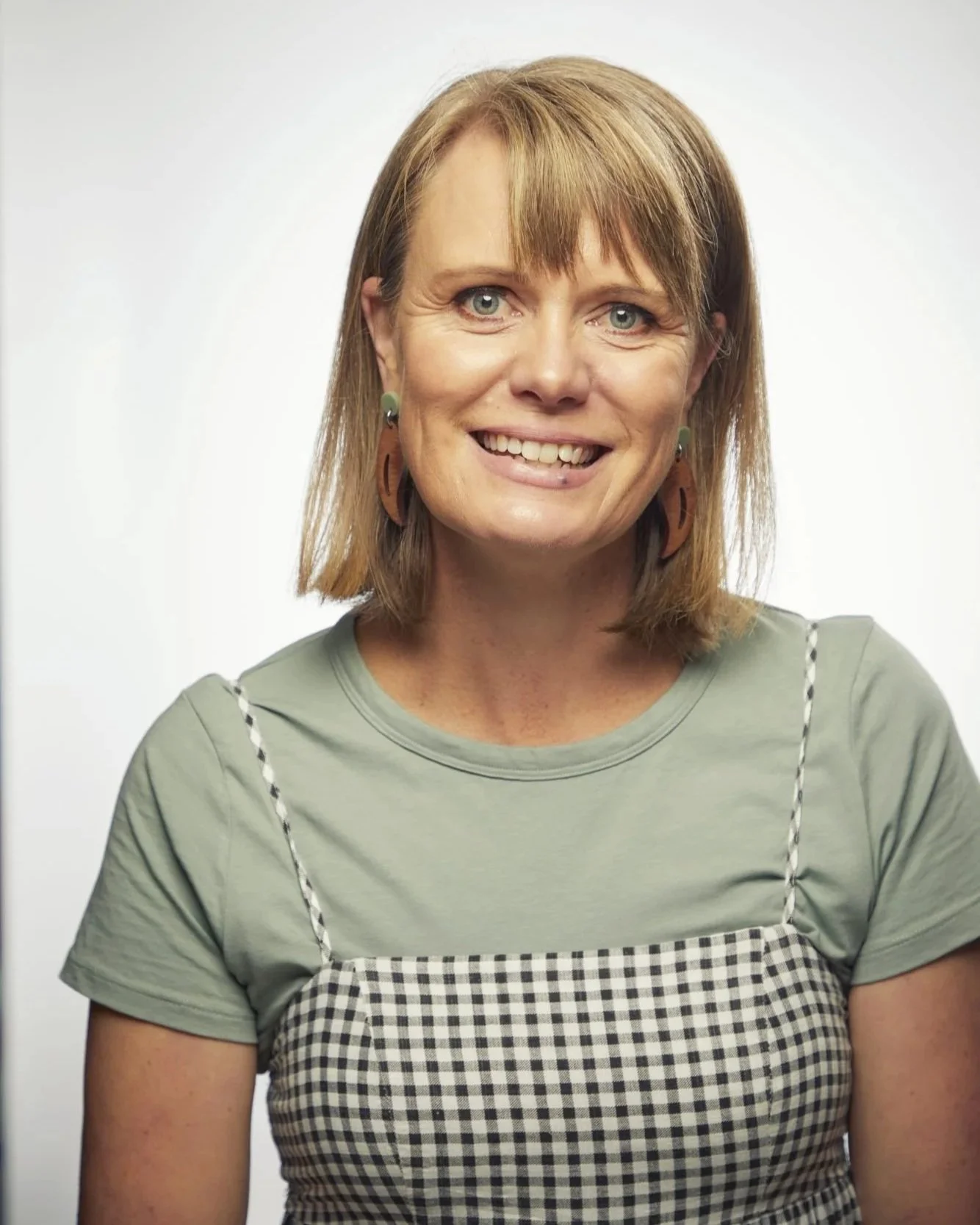
I hope to highlight that lasting change for children and families doesn’t come from adding more programs, but from helping existing systems work better together.
Much of my work has focused on the spaces between services, where families often fall through the gaps. Playgroups, when well supported and connected, sit at the centre of those spaces. They provide a trusted, relational entry point that helps bridge education, health and family services, particularly in the early years. When services are aligned around children and families and organised around places like playgroups that families already trust, outcomes improve.
Learn more about Our Place and hear Elfie speak as part of the panel discussion at the 2026 Playgroup Conference.
Article by Sinead Halliday
Photography courtesy of Elfie Taylor