
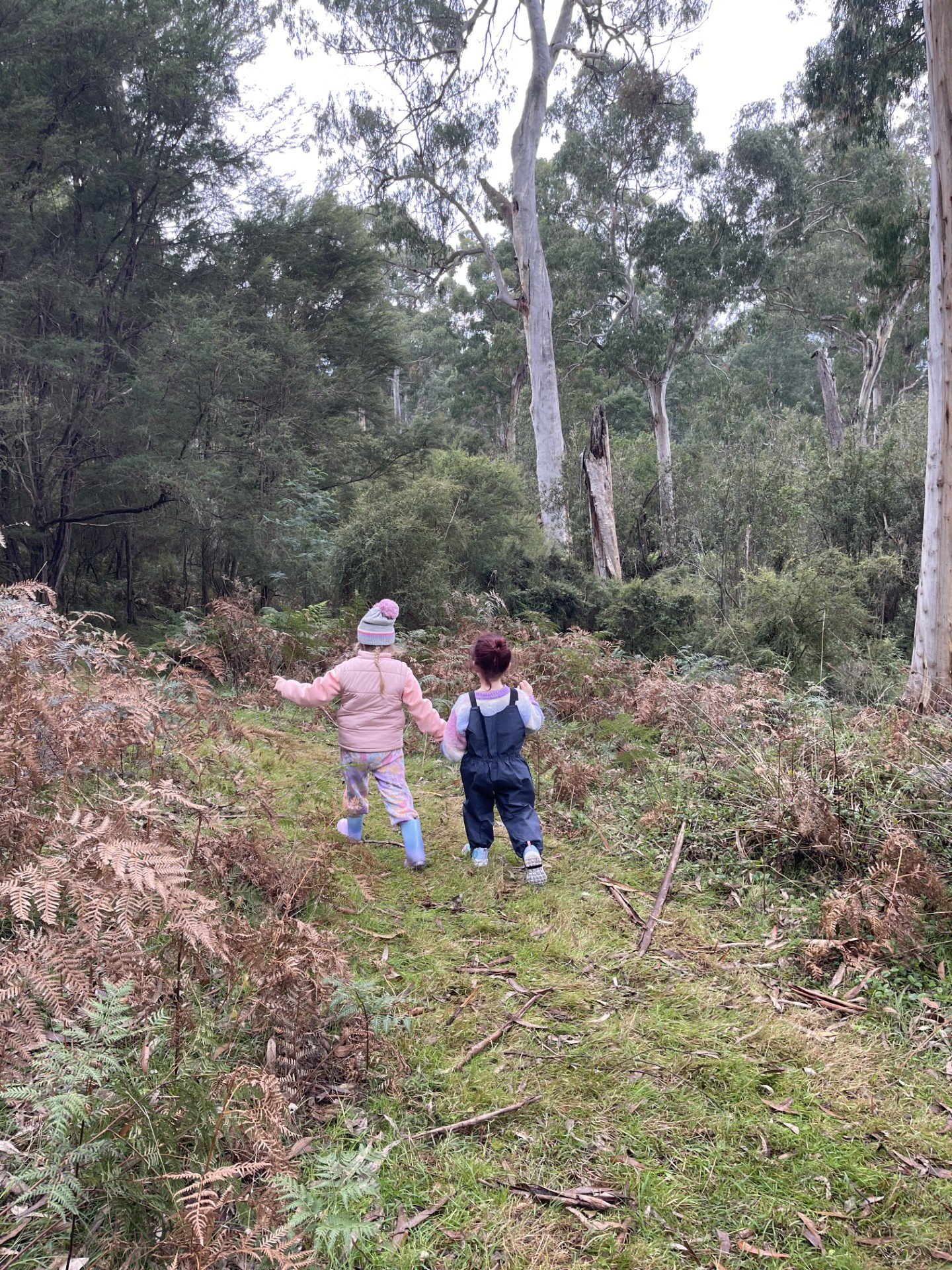
Fog gathers around the back hills and early morning dew glistens on the grass, the ferns. The assortment of leaves that have grown here long before we came.
Noongar yorga (Aboriginal woman from southwest Australia) woman Lisa Hodgson guides us, weaving up and around the Healesville bush. Lisa, part of the education team at Zoos Victoria, is a font of knowledge and alerts the senses to the possibilities all around.
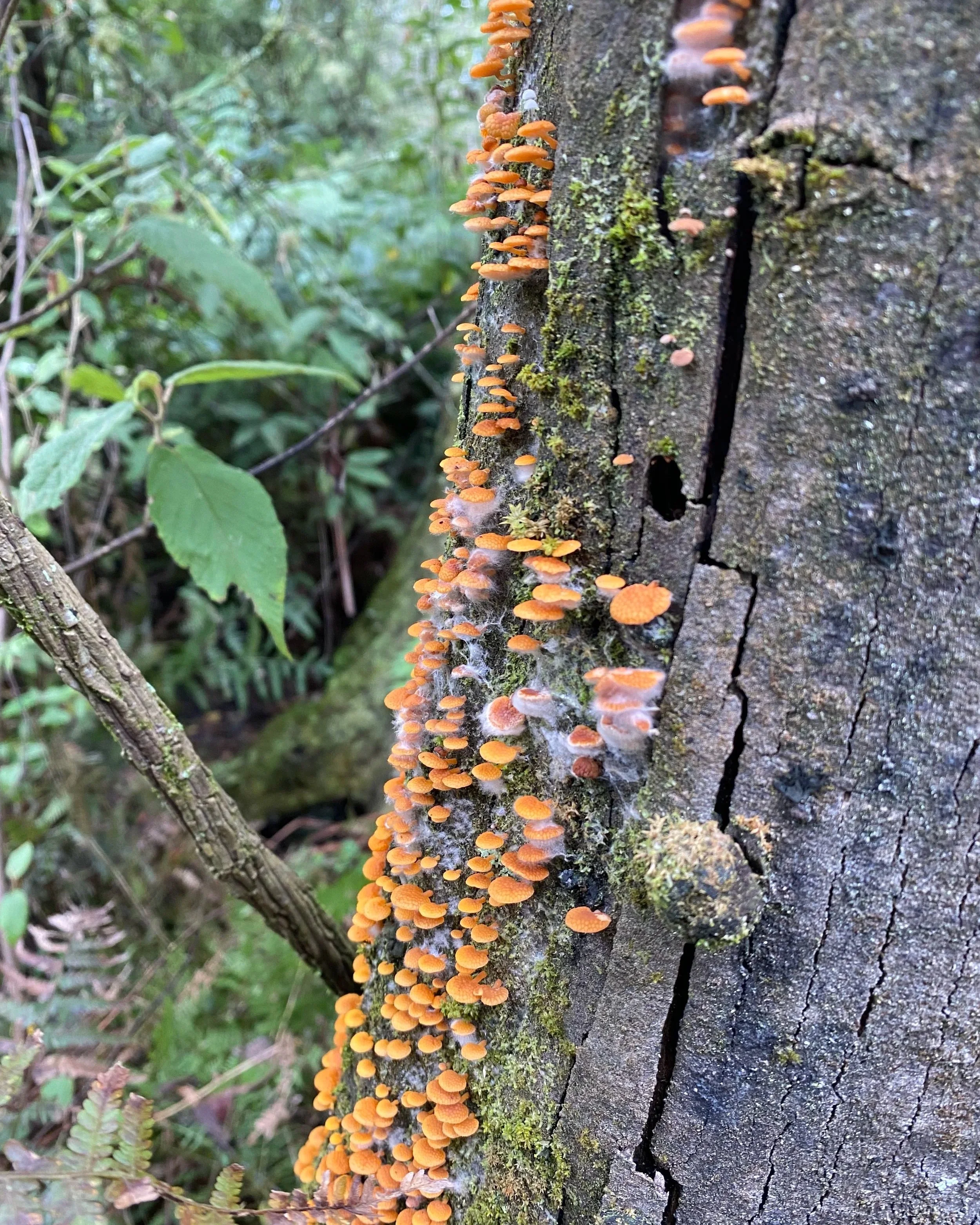
The young children at the Koorie Kids Bush Warriors playgroup are diminutive beneath the towering gums, their trunks too thick for even an adult to wrap their arms around. Yellow fungi creeps along the ridges of bark like caterpillars. Soft moss, fluorescent green in the light, drapes over fallen logs and bounces back after a poke from a curious young finger.
The children are feeling the spirit of this place, getting right up close with nature. They feel the droplets of water on leaves, the squelch of mud beneath their feet, the cool forest air in their lungs. They see the flick of a fairy wren's tail, holes left from rabbits and wombats in the dirt and the variety of mushrooms perched in the soil; some wear tiny brown hats, others broad white. They hear the chirping of birdsong overhead and the rustling of leaves in the breeze, the animals in the understory. Their home.
"You have to open your eyes and really see," said Elder Aunty Sheree looking around.
"The sanctuary is small. The land around here, it is so large."
"It is beautiful."
Aunty Sheree, quite amazingly, winds her way through the bush with her walking frame. She wanders along the muddy path with tree roots bursting from the dark moist soil and steps her way over slippery leaves that have fluttered to the ground. Up and up we go to the crest of a hill. If anything, she looks invigorated. This is her land. She breathes deeply and smiles.
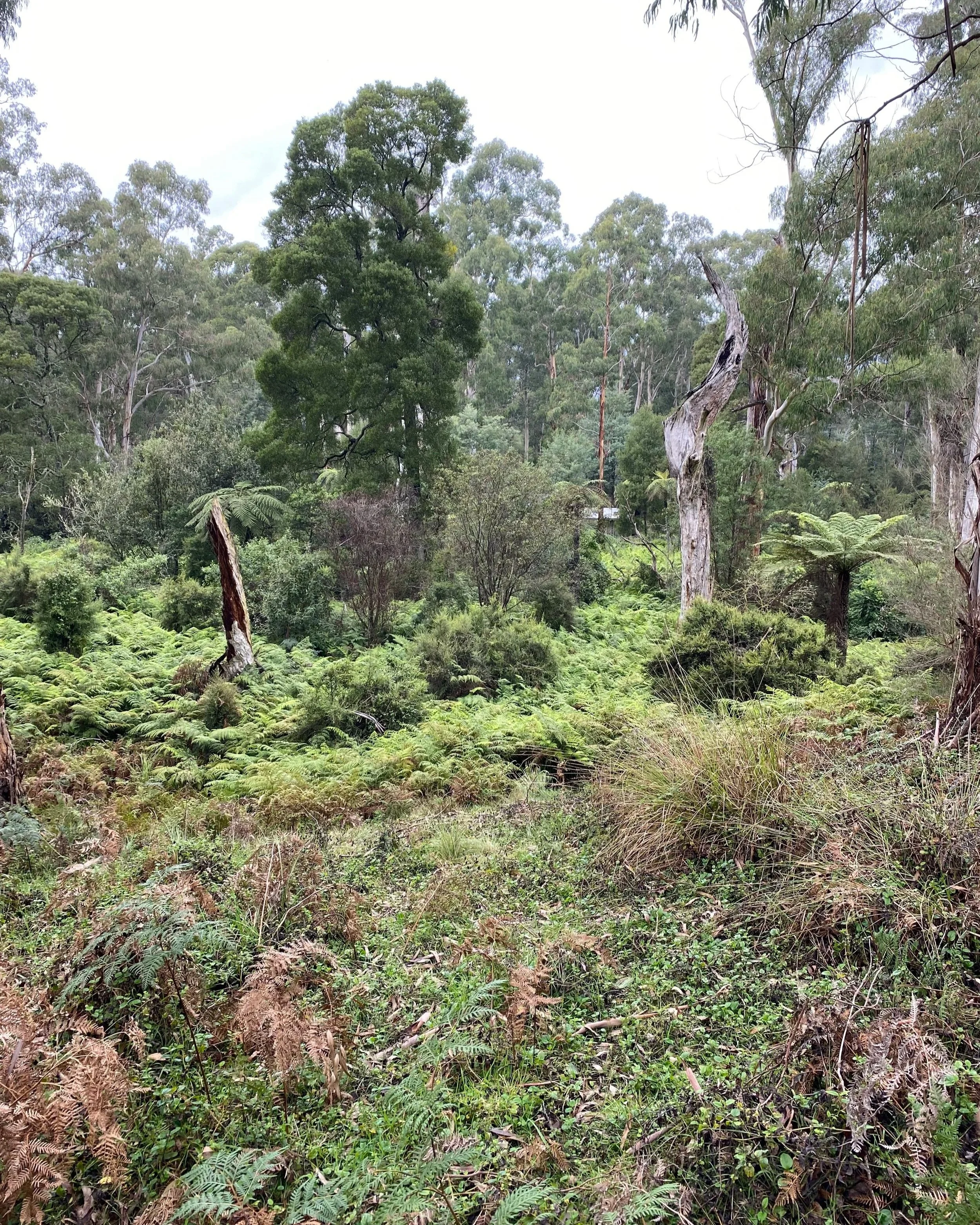
Down below we look out over a sea of green foliage. Lisa asks the children if they can identify the scar tree. They quickly do, with its top resembling a wing of an eagle. Lisa said that scientists have estimated the tree is around 350 years old.
There are many old trees here, with wire hung around the top to hold them steady as they age. Lisa tells us more about how trees support each other and the surrounding ecosystem. The children pick up the interrelationships ever at work on Country.
To the right is another ancient gum with a cutting in the side. Lisa asks if anyone knows what the wood was used for. "A canoe," the group responds.
Lisa said you can tell from the diamond shape. A triangle shape would represent something used for a house or building. You can see that the canoe was carved out well above the base to not harm the roots below.
Lisa has a steady flood of stories and information which she has accumulated over time. She has spent time with a local botanist here at the sanctuary. She points out a plant that can be used for contraception. A young shrub that develops a strong and prickly outer, which birds use for protection in their nests. A tiny delicious berry.. The fairy wren with the bright purple face to attract a mate. She tells us that Badgers Creek was named so because early colonisers thought a platypus was a badger.
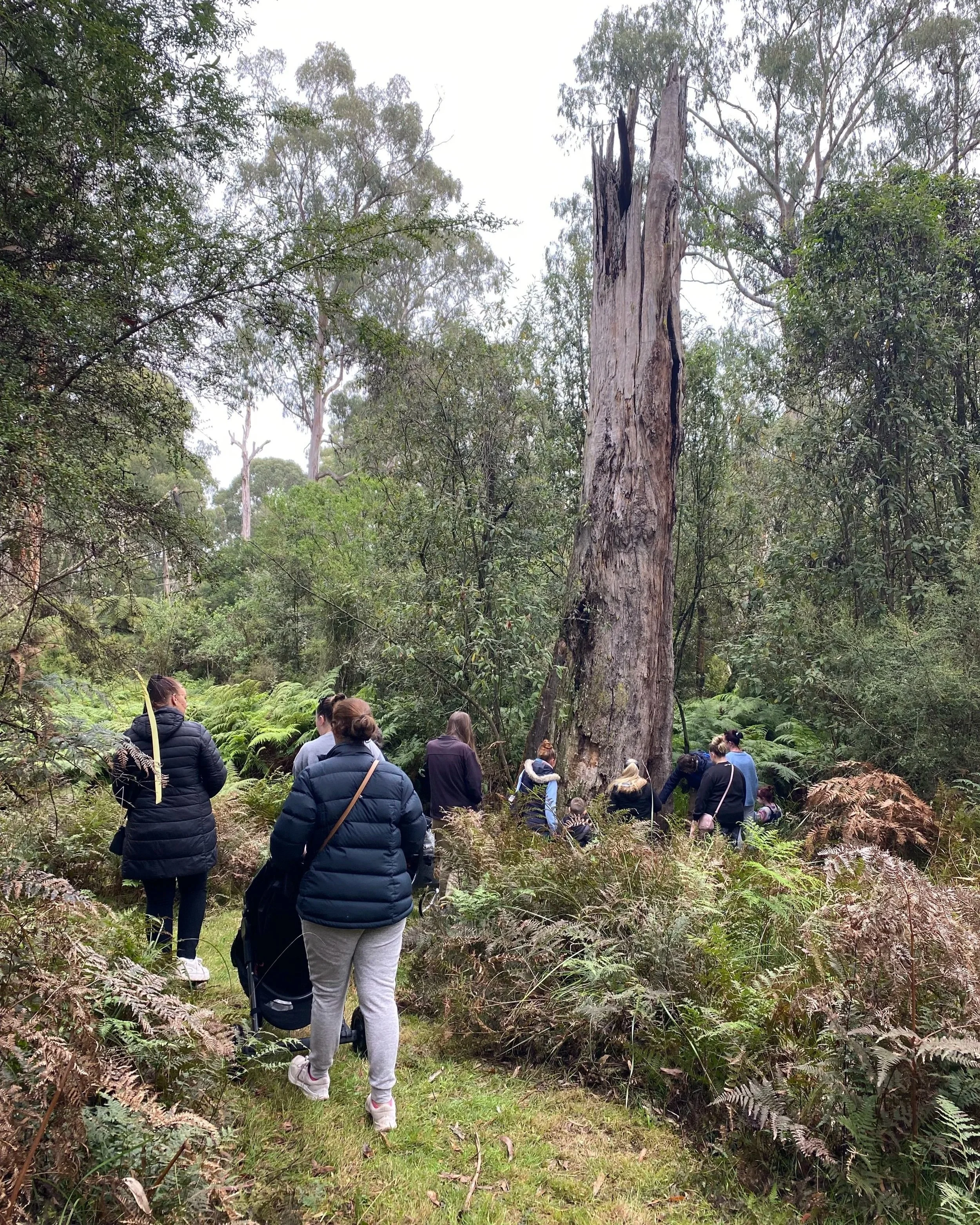
Shared are stories of animals and nature, creation and family, all intricately bound. There is a deep knowing and understanding of Country and family, of history, the land where their ancestors came from and to. What happened in their lives - how it carries through generations.
The Koorie Kids Bush Warriors Playgroup commenced in early 2024, and has been attended by more than 400 children, their parents and carers since.
It provides a culturally safe, empowering environment for parents and carers to work alongside facilitators, local Aboriginal Elders and Healesville Sanctuary staff like Lisa to strengthen their connections to culture and community.
For young Aboriginal children attending the playgroup, the culturally enriched activities build pride and confidence in who they are as they grow.
A didgeridoo can be heard as we walk alongside the animals. Stories are told in a yarning circle.
As we pass the creek, a VACCA staff member remembers a beautiful moment the playgroup shared here during the summer. Eating lunch on the riverbank as the children splashed in the water.
One of the best things about this playgroup is the shared connection and energy, the interweaving of generations, of family ties, of knowledge. The parents are eager to share their stories and learn more about Country and their ancestors.
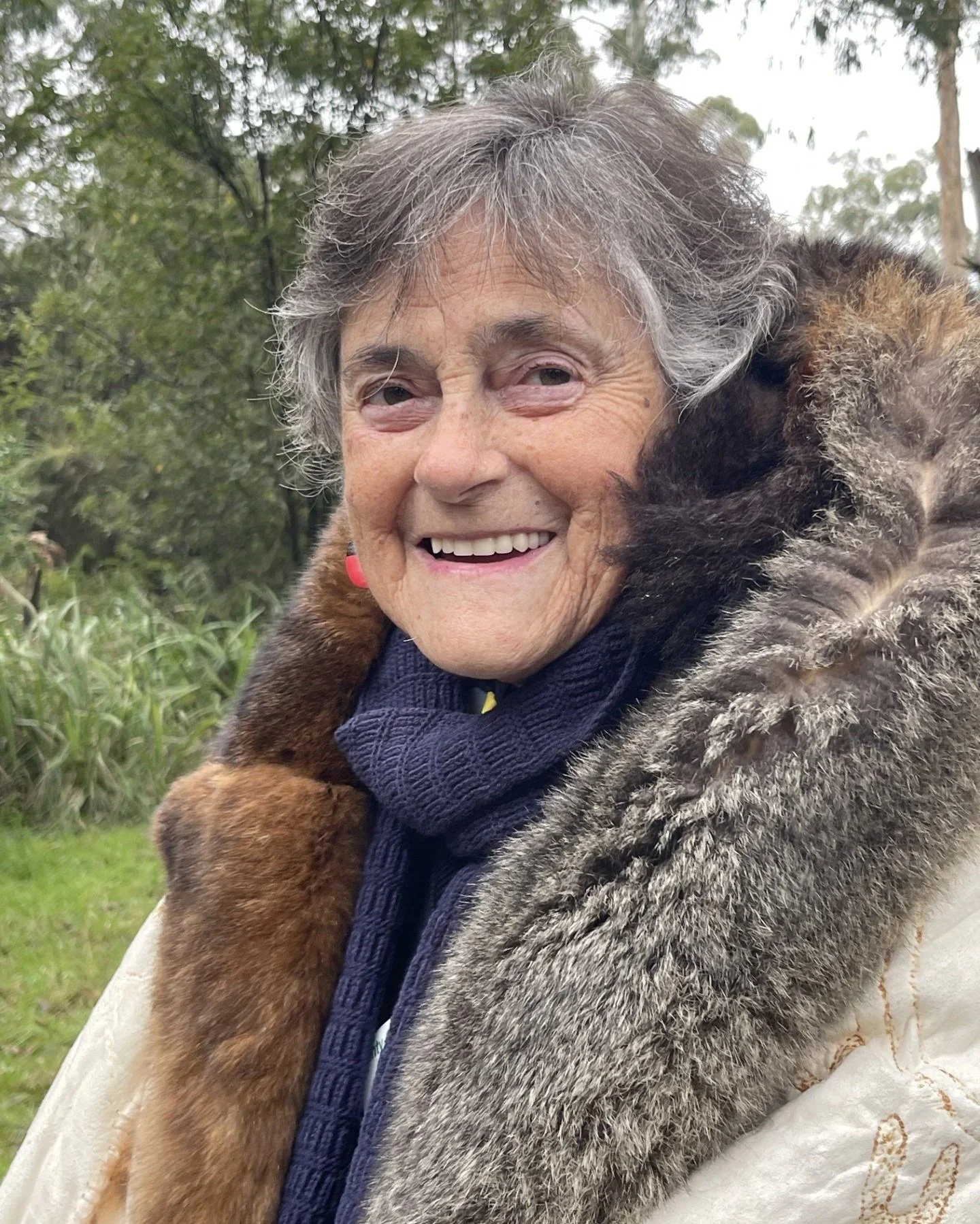
"The parents are learning with the children," she said. "There are some things they may not know, and they can learn it with their children and continue to share culture together. It is really about reintroducing traditional ways, a sense of belonging and identity."
"Go back to culture, go back to community."
As we return from our walk in the bush, we gather outside around the fire to share lunch and yarn.
There is purpose here, meaning. Not only to carry stories forward, but also the language, the culture, the love and pride, to look for all that is deadly and powerful, sacred and a part of belonging, identity, self, acceptance, togetherness.
Walking back to where the land is untouched. Reconnecting with the past. Honouring those who came before. Learning about each other and each other's languages. Paying respect.
"It's in us, this spirit, it's in us," said Aunty Sheree, a hand to her chest.
"Sometimes you don't know what's inside until you look deeply."
The Koorie Kids Bush Warrior program is a culturally enriched, nature-based playgroup program open to Aboriginal and Torres Strait Islander children aged 0-5 and their parents or carers, living in Melbourne’s Eastern suburbs.
To learn more and connect with the Koorie Kids Bush Warriors playgroup team, reach out to VACCA.
Early Childhood Support: earlyhelp@vacca.org
About the Victorian Aboriginal Child and Community Agency (VACCA):
VACCA is a statewide Aboriginal Community Controlled Organisation (ACCO) servicing children, young people, families, and community members in Victoria. We have protected and promoted the rights of Aboriginal children and young people since 1977.
As the Peak Voice for Aboriginal children in Victoria and leading provider of Aboriginal child and family services in the state, VACCA has supported Aboriginal children, young people, and families where they live for over 47 years.
Through our vision of self-determination – Live, Experience, and Be – VACCA exists to support culturally strong, safe, and thriving Aboriginal communities.
Article by Sinead Halliday
Photography by Sinead Halliday and Nancylee Merzel